
[Un article de The Conversation écrit par Jules Bellon – Doctorant en science des matériaux, UniLaSalle – Feriel Bacoup – Chargée de recherche, UniLaSalle – Gattin Richard – Responsable équipe agroalimentaire agro-industrie, UniLaSalle]
Faced with this omnipresence, recycling is trying to limit the environmental impact, but it remains insufficient. The plastic accumulates in the oceans in huge drift floating plates, but also invisible in the form of a micro – and nanoparticles that we ingest by eating, drinking, or breathing.
Against this massive pollution, there are levers of action, sometimes unknown, which deserve our full attention. Among them: biodegradable plastics, provided they offer them really adapted end -of -life conditions.
Materials that deteriorate quickly
Like cigarettes, the best plastic is undoubtedly the one that is not consumed. But in some cases, it remains difficult to do without it. Take a common example: meat trays in the supermarket. Their plastic packaging protects food from microbial contaminations and extends their shelf life, thus limiting food waste.
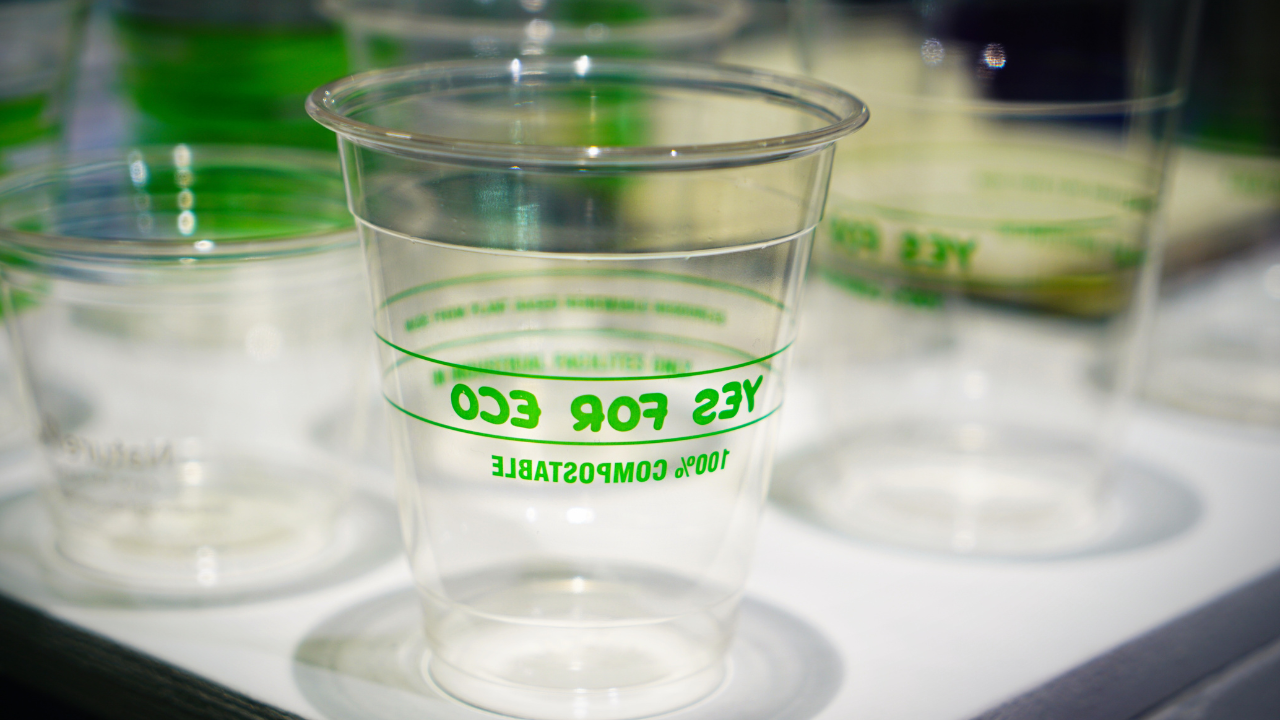
It is in this context that biodegradable plastics take on their full meaning. Although they often come from renewable resources – plants or microbials – this is not always the case: a plastic can be biodegradable without being biosourced, and vice versa. For bio -based plastics, their elementary constituents can be extracted, for example, from the starch contained in wheat grains. Others, such as polyhydroxyalcanoates (phas), are synthesized directly by certain bacteria as energy reserves. These polymers are already used today for the manufacture of single -use straws or dishes.
Unlike conventional plastics, which can persist for centuries in the environment, these materials are designed to biodegrade more quickly. They have the capacity to decompose into natural elements (water, carbon dioxide, biomass) under the action of microorganisms, provided that the right temperature, humidity and ventilation conditions are met. Like all plastics, they consist of chains of molecules attached to each other. But in biodegradable plastics, these chemical bonds are more fragile, in particular so -called esters or glycosidic connections. This makes them accessible to microorganisms capable of degrading them, using them as a source of carbon and energy. Under the right conditions, this process avoids the formation of micro – or persistent nanoparticles.
In comparison, conventional plastics are currently only recycled in low proportion. And unlike glass or metal, their recycling cannot be repeated indefinitely: each cycle, their mechanical properties deteriorate and it is therefore necessary to add to the recycled material of new plastic. Incineration, another option, remains expensive and generates polluting emissions, despite the energy recovery devices.
Improve the sector as an alternative to recycling
Once degraded by microorganisms, these plastics are transformed into simple compounds, such as carbon dioxide or water, and allow bacteria to multiply. They do not nourish the plants directly, because they are most often devoid of the mineral elements necessary for their nutrition. On the other hand, once degraded, they can nevertheless reintegrate the biological cycle of the soil by supporting microbial activity.
Their biodegradability can even be improved by adding certain organic constituents in their composition. This perhaps for example waste from the food industry, such as powder of orange peels or bananas, after a drying and grinding stage. In addition to accelerating the biodegradation process, this makes it possible to economically enhance these bio -waste, which often end up in discharge and pollute the surrounding soils and rivers.
This ability to disappear, however, has a cost: biodegradable plastics often have more limited mechanical properties, still variable depending on the formulations. For example, biodegradable plastic bags can have lower resistance to traction, making them more likely to break under the weight of their content. They are also, for the moment, more expensive to produce than their conventional equivalents. However, the development of dedicated industrial sectors and the implementation of large -scale production units could ultimately make it possible to reduce these costs thanks to economies of scale.
Domestic composting of plastics: (almost) only advantages
But beware: for a biodegradable plastic to really break down, certain conditions must be met. This requires sufficient temperature and humidity, as well as a microbial population capable of breaking the specific chemical bonds of the material. However, not all natural environments meet these criteria. This is why it is essential to ensure them an appropriate end of life – for example, in a bunch of compost, a medium rich in bacteria and fungi. There are then two types of composting: centralized (or industrial) composting and domestic composting.
Industrial composting is based on the collection of biodechets, their transport and their treatment in specific installations. This model requires costly infrastructure, qualified personnel, significant logistics, and generates a carbon footprint linked to transport. In France, this sector is still in development. If it were to become a privileged channel for biodegradable plastics, it would require a substantial effort of structuring.
Conversely, domestic composting makes it possible to largely avoid these constraints. Since January 2024, the sorting of biodechets at the source has become compulsory for households. Single-use packaging bearing a certification of domestic compatibility (such as the NF T51-800 standard) can therefore be added to food waste in a family compost bin.
The degradation of biodegradable plastics is certainly slower in domestic composting than in industrial composting, due to lower temperatures and less controlled conditions. However, this local treatment mode, without collection or transport costs, has real potential in a logic of circular economy. For this decentralized sector to be able to develop credible, accessible and efficiently, it remains essential to improve the biodegradability of plastics, in particular that of the main polymers used in formulations.
Improve the process and raise awareness through individual action
Several avenues emerge to meet this challenge, such as the development of biocomposites incorporating organic co -products, or even biological enrichment strategies of the composting environment. For example, specific microbial strains or natural additives (such as skimmed milk) can stimulate microbial activity and accelerate biodegradation. These approaches could give rise to the marketing of new “compost activators”, usable both by households and by communities or companies ensuring the management of so -called community composters – another promising path for decentralized composting, on the scale of neighborhoods or municipalities.
Finally, beyond the technical aspect, this model has an educational virtue: by participating in the degradation of packaging, consumers are aware of their environmental impact. This awareness can encourage them to reduce their production of waste, favor bulk or adopt reusable containers. And this is how a real virtuous circle starts, little by little.

With an unwavering passion for local news, Christopher leads our editorial team with integrity and dedication. With over 20 years’ experience, he is the backbone of Wouldsayso, ensuring that we stay true to our mission to inform.


