
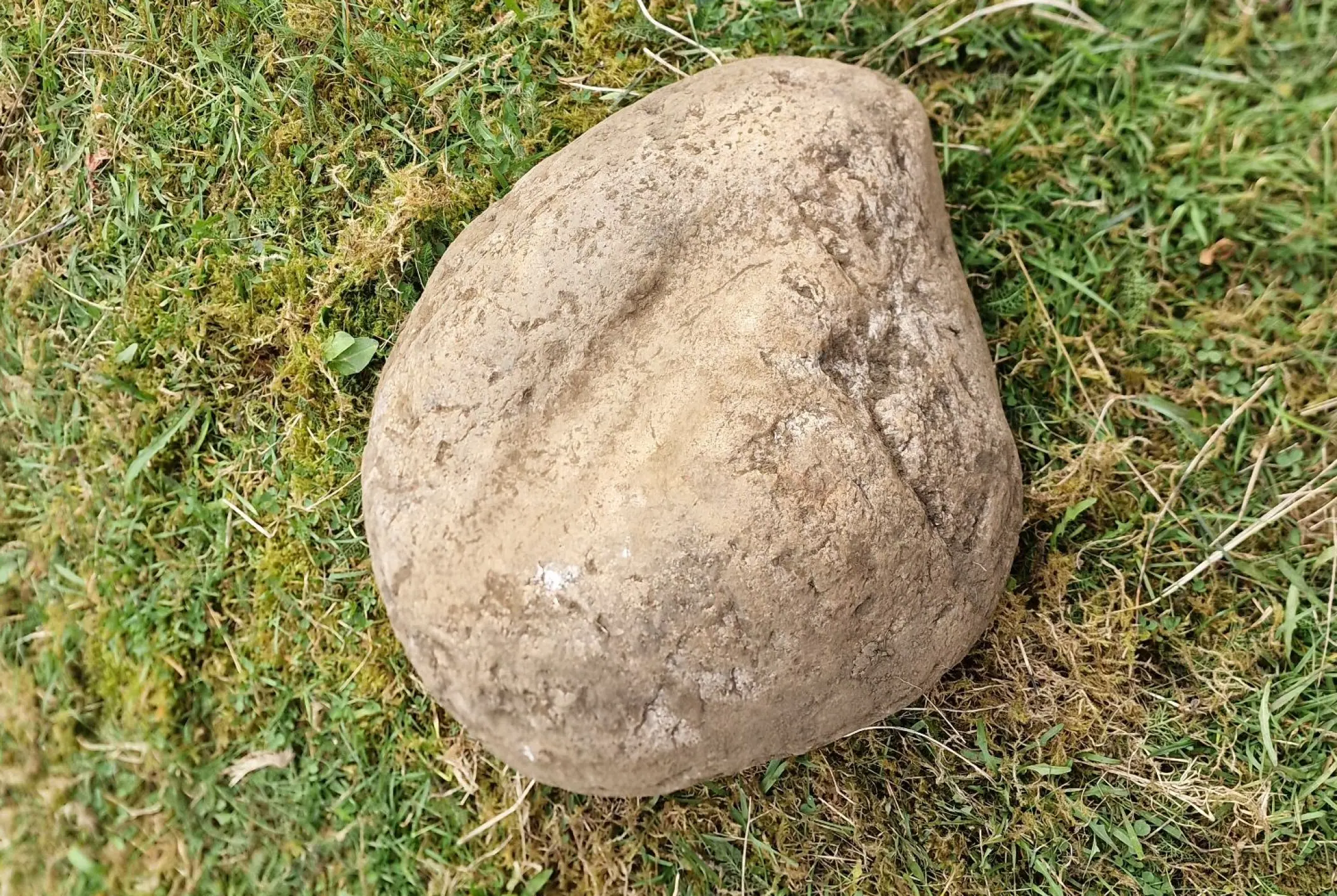
The symbols of power, war or fertility have crossed the ages by engraving in stone, in metal or in stories. However, some artefacts escape the classic categories and shake up the established stories. Among them, a recent discovery draws the attention of archaeologists to Norway. A simple stone, nicknamed Vulva Stonequestions our understanding of the Vikings funeral rituals and raises an unexpected question on the place of the feminine in a world long perceived through the male prism.
The researcher Søren Diinhoff, in charge of the site for the Bergen University Museum, was struck by the singularity of this object. According to him, his appearance, his texture and above all his location leave little room at random. He believes that she could have represented the deceased herself, stressing that nothing is ever placed at the center of a funeral boat without reason. The site could even have never hosted as a body, the grave then used as a cenotaph.

The “Vulva Stone”, a stone with a fascinating ambiguity
Quickly nicknamed “Vulva Stone”, stone intrigues as much as it divides. The on -site team has detected any trace of sculpture, but its naturally dug shape clearly evokes a female genital representation. This reading is not trivial, because no text or vestige has ever documented it in Vikings funeral practices. However, many Scandinavian sites have delivered “phallic stones”, erect stones in the shape of a penis, sometimes engraved, often associated with male burials.
For Torun Zachrisson, archaeologist at the Uppland museum in Sweden, the idea of a female symbol holds up completely. Indeed, several figurines in gold or bronze, found in Denmark and Northern Germany, represent women with genitals clearly put forward. Some go back to the year 500, which suggests a possible link with the goddess Freyja, known to embody fertility in the Nordic pantheon, as indicated in Livescience. In addition, she emphasizes that the ancient sacred places often included gendered elements. Sexuality, whether masculine or feminine, was then an integral part of the divine images before the arrival of Christianity.
However, caution remains in order. Marianne Moen, head of the archeology department of the Museum of Cultural History of Oslo, underlines that natural forms are subject to interpretation. Unlike the engraved phallus, sculptors did not shall this stone. No one can formally prove an intention behind the object, even if its distant origin and its specific placement reinforce the idea of a strong symbolism.
What this discovery changes in our gaze on the Vikings
Archaeologists agree on one point: the Viking art often highlights the masculine. Indeed, objects such as phallic stones or ritual weapons have long symbolized male power. However, women did not stay away from rituals or exchanges. Many Skumsnes tombs contain parts from Ireland, England or the Franc Empire. In addition, one of them had a engraved boat, stressing the importance given to maritime exchanges.
Rebecka Jonsson, Swedish archaeologist who participated in a excavation in which a sculpted phallic stone and a round funeral orbs were found side by side in a tomb of the 7th century, estimates that this association opens the way for a finer gendered rereading of the burials. She recalls that researchers have often interpreted orbs discovered in the tombs of women in Sweden, especially on the island of Lovö, as symbols of fertility, even maternity. The archaeologist Bo Petré, in a recent report relayed by Arkeonews, even argues that they could evoke eggs or breads, thus associating female fertility with life and renewal cycles.
The hypothesis of a “vulva stone” thus enriches this reading. If its uniqueness for the moment invites prudence, it nevertheless makes it possible to question the biases of modern archeology, which has long underlined the clues of female spirituality. As the Science Norway site explained, even the most modest stones can transform our understanding of an era. And this is precisely what this enigmatic stone of skumsnes seems to do.

With an unwavering passion for local news, Christopher leads our editorial team with integrity and dedication. With over 20 years’ experience, he is the backbone of Wouldsayso, ensuring that we stay true to our mission to inform.


