
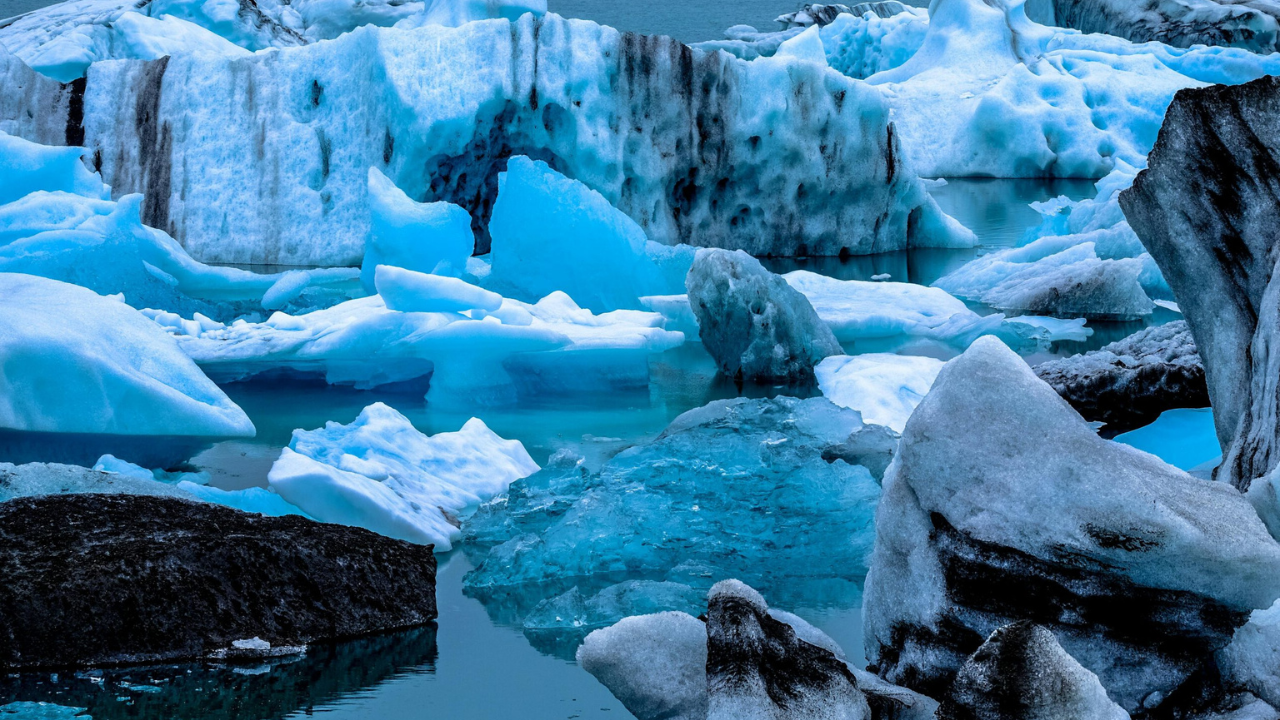
Long perceived as icy deserts frozen in time, the Arctic regions are gradually revealing an unsuspected biological complexity. Beneath the apparently inert surface of the ice, invisible life organizes itself, interacts and transforms its environment. It is at the heart of this white matter, in the most exposed areas of the Greenlandic ice cap, that a team of researchers has just shed light on a little-known viral world, likely to influence local ecological balances.
Their presence was confirmed by metagenomic and metatranscriptomic analyzes carried out on around thirty samples taken during two scientific campaigns in 2019 and 2020. This work, published in the journal Microbiomedemonstrate that these viruses are not simple fossil residues or fragments of DNA trapped in ice, but rather biologically active players according to the metatranscriptomic signatures observed. They interact with algae, infect their cells, modulate their metabolism and even leave their genetic imprint within host genomes, as revealed by analyzes of cultivated algae from the Fraunhofer Cryophile Collection.

The Greenland ice sheet as a natural climate regulator
In these immaculate landscapes, color is important. The red or green hues of certain snows reveal the presence of pigmented algae, capable of covering large areas of the Greenlandic ice sheet in summer. However, this pigmentation reduces the solar reflection capacity of the ice, a phenomenon called albedo, thus accelerating its melting. But these algal proliferations do not evolve alone. Giant viruses, particularly those from the Asfuvirales, Algavirales and Imitervirales families, appear as invisible predators that control the growth of these algal populations.
Researchers have shown that these viruses infect dominant colored snow algae, such as Chloromonas remiasiiand play a key role in limiting their expansion. By doing so, they indirectly participate in the preservation of albedo and the stabilization of seasonal melting processes. This biological dynamic, observed until now in the oceans, finds a new illustration here on glaciers. As indicated in the summary of the study relayed by Futura Sciencesthese viruses could help limit melting by reducing the warming effect of algal blooms.
Exploring viruses to better anticipate warming
This discovery goes beyond the simple microbiological framework. By revealing the diversity and activity of NCLDVs on the Greenland ice sheet, researchers are enriching our understanding of natural climate regulations. These viruses, by influencing the structure of algal and protist communities, also modify the carbon cycle in glacial habitats. Their potential impact on greenhouse gas emissions from cast iron caps still remains uncertain but could be significant.
These viruses do not remain silent in cells. In reality, their genes related to transcription or packaging show constant activity. Moreover, their exchanges with eukaryotic hosts are so close that they sometimes leave lasting imprints. These traces, still visible in the genome of certain algae, tell of a long coevolution. The study even identified viral sequences in several cultivated species, which confirms that these links are ancient and well integrated into the evolution of polar algae.
Over the course of the analyses, the phylogenetic trees drawn up from the viral genes show an abundance of lineages that are still little known, some close to viruses used as biological control agents in the oceans. This complex network of viral, microbial and climatic relationships suggests that polar ecosystems contain unsuspected levers to better anticipate the effects of climate change. And maybe this is just the beginning.

With an unwavering passion for local news, Christopher leads our editorial team with integrity and dedication. With over 20 years’ experience, he is the backbone of Wouldsayso, ensuring that we stay true to our mission to inform.


