
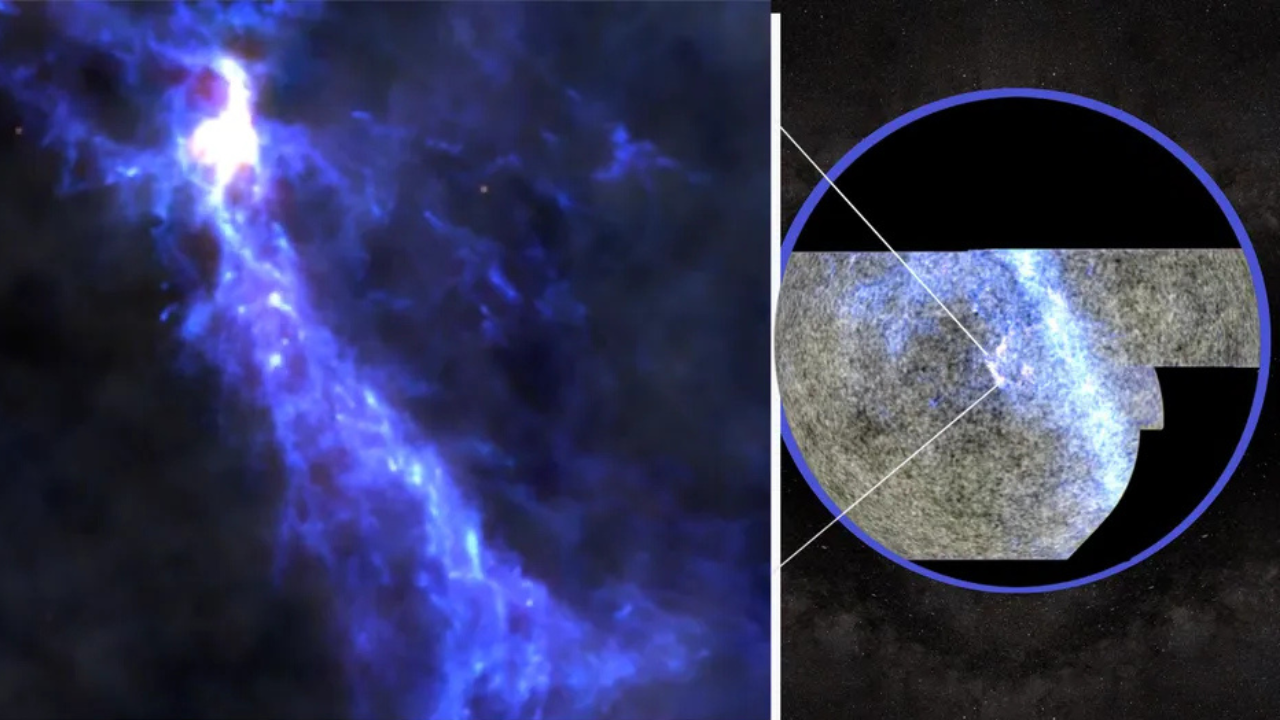

Thanks to an overpowered telescope located in Chile, observations could be carried out in 2022 to capture a spectacular image, that of the first moments of the universe, 13.8 billion years ago.
Today, as we know, nothing is faster than light. Well, you say that in the infancy of the universe, the environment was so hot that this great energy could not move there freely as is the case today.
In view of different analyzes, it took almost 380,000 years for the universe to cool down and the light could wander in the infinite immensity of the cosmos. In fact, thanks to the Cosmological Telescope of Atamaca (ACT) in Chile, astronomers who captured the image of the primitive universe could see “the first steps towards the creation of the first stars and galaxies“Explained Suzanne Staggs, Act director and researcher at Princeton University in remarks reported by Space.
Yes because seeing the first steps of the cosmos also makes it possible to have an eye on the formation of the largest cosmic structures, where the material was born, concentrated and then saw form the clouds of hydrogen and helium which in collapsing allowed the appearance of all the stars that can be observed today. At least those whose light has reached us before they go out forever.
The mysteries of dark matter and dark energy soon resolved?
Unfortunately, it will still take a long time for us to resolve this 13.8 billion year old puzzles. Indeed, if we were able to prove the existence of many structures in the universe, thanks to observations in particular, dark matter and dark energy remain out of reach.
We know that they exist in the universe and that they represent most of the mass of the cosmos. However, if they were enough to say “we know” so that something proven, we would know.
But this is not the case. Indeed, the dark matter being invisible and the dark energy which also follows from it, it is impossible, for the time of observing it and therefore from indeed proving their existence.
This image of the baby universe is an excellent start, but despite our technological advances, we need even more so that we can give an answer to this enigma today insoluble.
The scientific community then turns its gaze to an even more sophisticated new observatory, that of Simons, still in Chile, which will certainly allow us to advance in the resolution of this cosmic investigation.

With an unwavering passion for local news, Christopher leads our editorial team with integrity and dedication. With over 20 years’ experience, he is the backbone of Wouldsayso, ensuring that we stay true to our mission to inform.


