
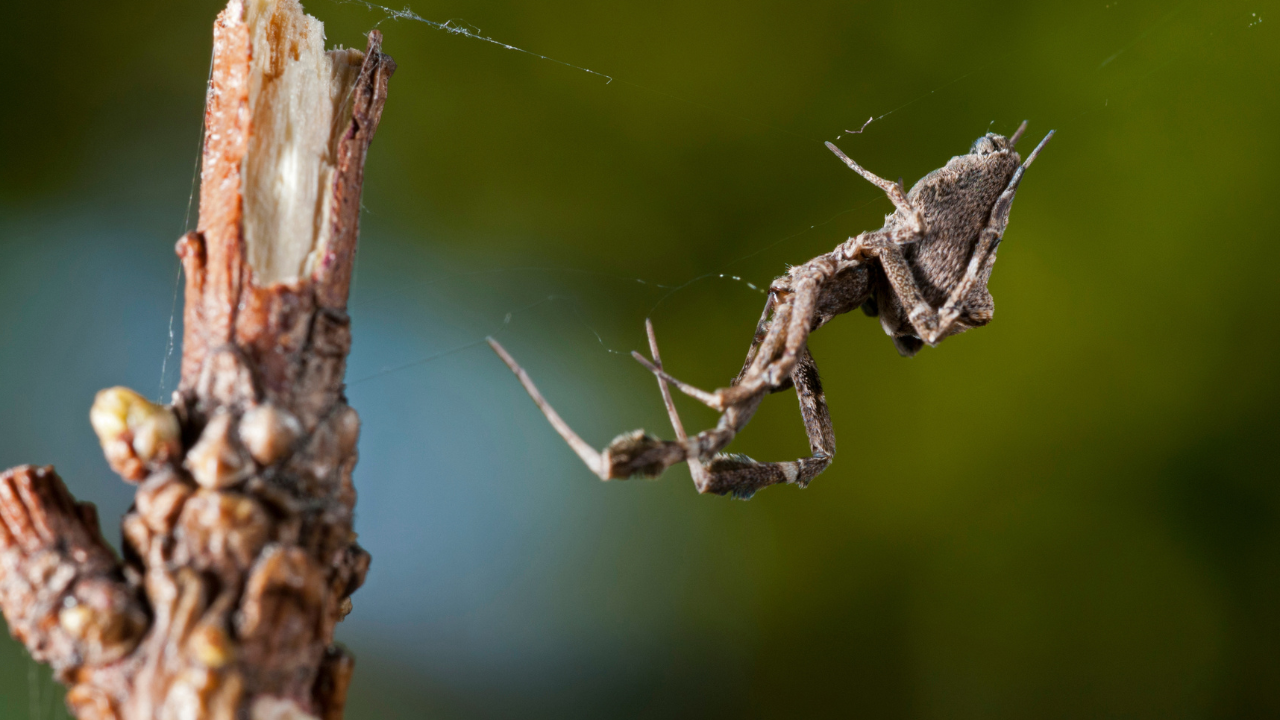

Surprising hunting techniques of spiders
In the animal kingdom, predation is omnipresent. The multiple hunting techniques operated by the different species do not end up surprising researchers.
Certain species of spiders, for example, are known to develop amazing stratagems to satisfy their nutrients. This is the case for example of the species Psechrus Clavis, Endemic of Southwest Asia, which uses fireflies which attract, in the canvases woven beforehand, future prey for these spiders (mainly insects).
But a kind of spiders opts for a completely different technique, even more surprising than that cited above. Indeed, Uloborus plumipes, A kind of non-sale cribellates from North Africa, uses one of its natural fluids to offer a feast.
These spiders vomit on their prey
The spiders of the family of UloBoridae are known to wrap their prey in their silk web, which can sometimes reach hundreds of meters, then vomit them to kill them, after capturing them using their hooks.
Knowing that this category of spiders does not have venom -producing glands or means of injecting toxins to their prey by their hooks, a research team, having studied these arachnids more closely, observed that poisonous substances are always present and secreted by the average intestine, also responsible for digestive juices.
“We suggest that UloBoridae spiders have not developed new toxic secretions, but have rather changed the way in which existing secretions are deployed”, wrote the authors of the study published on June 13, 2025 in the journal BMC Biology.
Digestive toxins which would have evolved before the venom
Researchers think that the digestive toxins present in the belly of these spiders, and which are used to kill their prey, would have evolved before the venom.
In their study, the research team also explains that digestive toxins have become the main means of defense and capture for the spiders of the family of UloBoridae, which is considered in other species as a secondary solution to overcome their prey.
These spiders are not the only ones to use this special hunting technique. Indeed, Iflscience indicates that the mygale on white knees, Acanthoscurria Geniculate of its Latin name, also has similar proteins, but its digestive juices do not have as many toxins as those of UloBoridae.
Source: Iflscience

With an unwavering passion for local news, Christopher leads our editorial team with integrity and dedication. With over 20 years’ experience, he is the backbone of Wouldsayso, ensuring that we stay true to our mission to inform.


