

[Un article de The Conversation écrit par Ted Powers – Professor of Molecular and Cellular Biology, University of California, Davis]
Called with the native name of the island, Rapa Nui, rapaamycin was initially used as immunosuppressant, in order to prevent the rejection of organ transplants and improve the success rate of the establishment of stents, small metal trellis intended to support the arteries in the fight against coronary coronary disease (which results in gradual narrowing of the arteries that feed the heart, editor's note).
Its use has since expanded to the treatment of various types of cancer, and researchers today explore its potential in the context of the management of diabetes,
Neurodegenerative diseases, even the fight against the misdeeds of aging. Thus, studies highlighting the capacity of rapamycin to prolong the lifespan or to fight age -related diseases seem to appear almost daily for some time … A request on PubMed, the search engine lists more than 59,000 articles mentioning rapamycin. This is one of the drugs that is most talked about in the medical field.
However, although rapamycin is omnipresent in science and medicine, the way it was discovered remains largely unknown to the public. As a scientist who devoted his career to studying its effects on cells, I felt the need to better understand his history.
As such, the work of the historian Jacaury Duffin relating to the Medical Expedition to Easter Island (Metei), a scientific expedition set up in the 1960s, have completely changed the way in which many of my colleagues and I are now considering our field of research.
The discovery of the heritage complex of rapamycin raises important questions about the systemic biases that exist in the biomedical research sector, as well as on the debt of pharmaceutical companies towards the indigenous territories from which they extract their flagship molecules.
Why such an interest in rapamycin?
Rapamycin's action is explained by its ability to inhibit a protein called Target of Rapamycin Kinase, or Tor. The latter is one of the main regulators of cellular growth and metabolism. In concert with other partner proteins, Tor controls the way in which cells respond to nutrients, stress and environmental signals, thus influencing major processes such as protein synthesis and immune function.
Given its central role in these fundamental cellular activities, it is hardly surprising that a TOR malfunction can result in the occurrence of cancers, metabolic disorders or age -related diseases.
A large number of specialists in the field know that this molecule was isolated in the mid -1970s by scientists working within the Ayerst Research Laboratories pharmaceutical laboratory, from a soil sample containing the bacteria Streptomyces hydroscopicus. What we know less is that this sample was taken as part of a Canadian mission called Medical Expedition to Easter Island, or Metei, led to Rapa Nui – Easter Island – in 1964.
History of Metei
The idea of the Medical Expedition to Easter Island (Metei) germinated in a team of Canadian scientists made up of the Stanley Skoryna surgeon and the bacteriologist Georges Nogrady. Their goal was to understand how an isolated population adapted to environmental stress. They believed that the forecast of the construction of an international airport on Easter Island offered a unique opportunity to clarify this issue. According to them, by increasing the contacts of the island's population with the outside, the airport was likely to cause changes in its health and well-being.
Funded by the World Health Organization, and logistically supported by the Canadian Royal Navy, the Metei arrived in Rapa Nui in December 1964. For three months, the team brought to almost all of the 1,000 inhabitants of the island a whole battery of medical examinations, collecting biological samples and proceeding to a systematic inventory of flora and island fauna.
As part of this work, Georges Nogrady collected more than 200 soil samples, one of which turned out to contain the strain of bacteria Streptomyces Rapamycin producer.
It is important to understand that the primary objective of the expedition was to study the people of Rapa Nui, in a context which was seen as that of an open -air laboratory. To encourage residents to participate, researchers did not hesitate to use corruption, offering them gifts, food and various supplies. They also used coercion: for this purpose, they ensured the services of a Franciscan priest for a long time on the island to help them with recruitment. If their intentions were perhaps honorable, it is nevertheless there of an example of scientific colonialism in which a team of white investigators chooses to study a mainly non-white group without its assistance, which creates an imbalance of power. A bias inherent in the expedition therefore existed from the design of the Metei.
In addition, several of the starting hypotheses had been formulated on erroneous bases. On the one hand, the researchers assumed that the inhabitants of Rapa Nui had been relatively isolated from the rest of the world, when there was in reality a long history of interactions with external countries, as evidenced by various stories of which the oldest went back to the beginning of the 18the century, and whose publications were spread out until the end of the 19th centurye century.
On the other hand, the organizers of the Metei led from the postulate that the genetic baggage of the population of Rapa Nui was homogeneous, without taking into account the complex of the island in matters of migration, slavery and diseases (certain inhabitants were indeed the descendants of survivors of the milking of African slaves who were returned to the island and brought there certain diseases, including the smallpox). The modern population of Rapa Nui is actually mixed, resulting from both Polynesian, South American, even African ancestors.
This error of appreciation has undermined one of the key objectives of the Metei: assessing the influence of genetics on the risk of illness. If the team has published a certain number of studies describing the fauna associated with Rapa Nui, its inability to establish a reference base is probably one of the reasons why no follow -up study was carried out after the completion of Easter Island Airport in 1967.
Credit to whom the right
The omissions that exist in the recits on the origins of rapaamycin are the reflection of ethical angles frequently present in the way in which we remember the scientific discoveries.
Georges Nogrady brought back from Rapa nui to soil samples, one of whom reached Ayerst Research Laboratories. There, SURUE will Sehgal and his team wasolated what was appointed Rapamycine, which they ended up marketing in the late 1990s as an immunosuppressant, under the name Rapamune. If we know the obstinacy of Sehgal well, which was decisive to carry out the project despite the upheavals which waved at that time the pharmaceutical society for which he worked – he even went so far as to conceal a culture of bacteria at home – neither nogrady nor the metei were never credited in the main scientific articles he published.
Although rapaamycin has generated billions of dollars in revenues, the people of Rapa Nui have made no financial profit to date. This raises questions about the rights of indigenous peoples as well as on biopiracy (which can be defined as “illegitimate appropriation by a subject, in particular by intellectual property, sometimes illicitly, natural resources, and/or possibly cultural resources in connection with them, to the detriment of another subject”, editor's note), in other words in this context the marketing of indigenous knowledge.
Agreements such as the 1992 United Nations Convention on Biological Diversity and the 2007 Declaration on the Rights of Aboriginal peoples aim to protect indigenous demands on biological resources, by encouraging all countries to obtain the consent and participation of the populations concerned, and to predict reparations for potential damage before undertaking projects.
These principles were not however in force in the era of Metei.
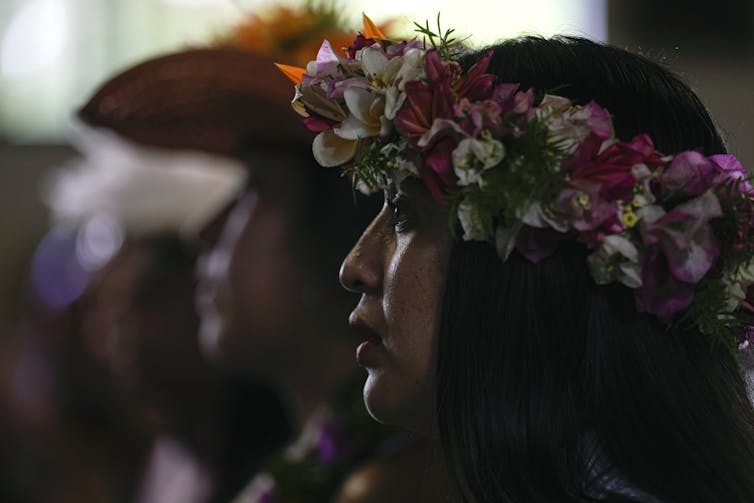
Some people argue that, since the bacteria producing raascin was found elsewhere than in the soil of Easter Island, the latter was neither unique nor essential to the discovery of the drug. Others also argue that as long as the islanders did not use rapamycin and did not know the existence on their island, this molecule did not constitute a resource likely to be “stolen”.
However, the discovery of Rapamycin at Rapa Nui laid the foundations for all the subsequent research and marketing around this molecule. This was only possible because the population was the subject of the Canadian team study. The formal recognition of the essential role played by the inhabitants of Rapa Nui in the discovery of rapamycin, as well as public awareness on this subject, are essential to compensate them up to their contribution.
In recent years, the pharmaceutical industry has started to recognize the importance of compensating indigenous contributions fairly. Some companies have undertaken to reinvest in communities where the precious natural products they exploit come from.
However, with regard to Rapa Nui, companies that have directly benefited from rapamycin have not yet made such a gesture.
If the discovery of rapamycin has undoubtedly transformed medicine, it is more complex to assess the consequences for the people of Rapa Nui of the Metei expedition. Ultimately, its history is both that of a scientific triumph and social ambiguities.
I am convinced that the questions it raises (biomedical consent, scientific colonialism and concealment of certain contributions) must make us realize that it is necessary to examine more critically than so far has been the inheritances of major scientific discoveries.

With an unwavering passion for local news, Christopher leads our editorial team with integrity and dedication. With over 20 years’ experience, he is the backbone of Wouldsayso, ensuring that we stay true to our mission to inform.


