

While artificial intelligence redefines digital uses at an unprecedented speed, some essential daily machines continue to turn on old two decades technologies. In hospitals, rail networks or banking distributors, the use of Windows XP in 2025 reveals a persistent technological paradox. This operating system, abandoned for more than ten years by Microsoft, survives in critical infrastructure, not by choice but by constraint, inheritance of fixed software chains and hard to replace.
Behind this incongruous image, thousands of similar cases exist around the world. In Germany, Deutsche Bahn still seeks technicians capable of manipulating Windows 3.11 or MS-DOS, to display certain information on board trains. These operating systems are used not by choice, but because the tools that depend on it have never been modernized.
In the United States, automatic ticket distributors best illustrate this dependence. Elvis Montiero, New Jersey -based technician, explains that the costs, the rewriting complexity of proprietary software and regulatory requirements slow down migration to recent systems. He specifies that some automata still use Windows NT, released in 1993.
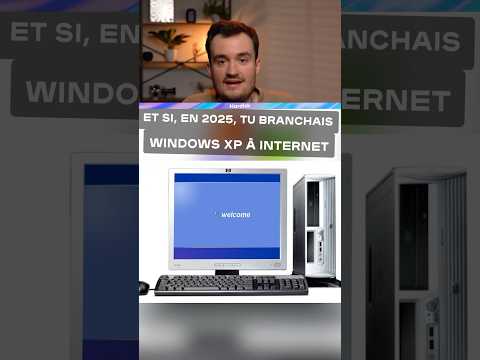
The use of Windows XP in 2025 is often based on a forced choice
Maintaining Windows XP in critical systems is not linked to nostalgia. As an article published on Medium explains, this system remains essential in sectors such as industry, health or defense, due to its stability and the compatibility it offers with old software or specific peripherals. In particular, it evokes cases where equipment requires RS232 ports or pilots designed for obsolete material architectures.
Migration to modern environments would often involve a complete replacement of hardware and the total redesign of software, an investment that many structures cannot afford. The author specifies that in some cases, the developers have simply never adapted software to operate on other versions of Windows, which almost makes their carrying without starting everything again.
In March 2024, Computer World indicated that 0.39% of desktop computers were still running on Windows XP, or more than five million connected machines. Hospitals still use it to operate tools designed in the late 1990s, which have become essential for the management of medical records. At NASA, some control systems continue to use XP Embedded, due to the lack of budget granted to their update.
Very real flaws in front of a world that no longer sees them
Such technological inertia could have gone unnoticed if the web had not connected these machines to the rest of the world. But this is not always the case. To demonstrate the consequences, the Youtubeur Eric Parker installed a version of Windows XP in a virtual machine without firewall. His experience shows that in less than ten minutes, the system was infected with active malware in the background. Other malicious software then took over, changing the task planner and even creating a hidden administrator account called “Adma”.
The malicious content detected in Eric Parker's experience includes Trojan horses and backdoors that have been using known flaws for years. Some files disguise themselves as a system process, such as “svchost.exe”, in order to deceive users. These attacks demonstrate how vulnerable XP is vulnerable, even without user action. A Windows 10 or 11 PC, even without antivirus, would not undergo such rapid compromise.
In a hyperconnected world where artificial intelligence begins to manage emails, the use of a system as exposed as Windows XP is not only archaic. It becomes a systemic risk, often ignored because it is invisible. Behind the frozen interface screens and slow printers are played out of global safety issues. Obsolescence here does not manifest itself by stopping operation, but by maintaining a system that no one really knows how it could break down – or how to fix it when it will.


