
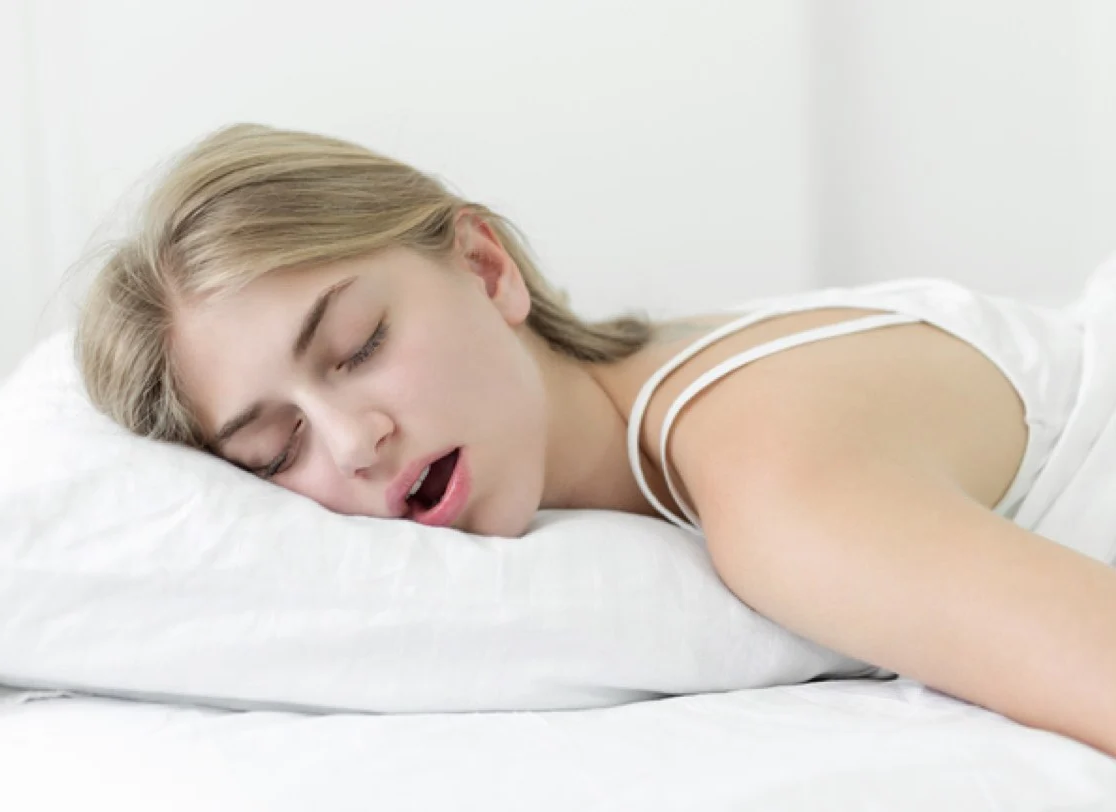
Sleep has long been perceived as a neutral territory, devoid of bias, where everyone can recover their strength free from judgment. However, even in nocturnal intimacy, certain symptoms remain marked by stereotypes. Snoring remains associated with a virile, sonorous, almost caricatured image, far removed from what we imagine in a woman. This cultural prism has long eclipsed a reality that data now makes visible. Women's snoring is not an exception, but a well-documented phenomenon, with precise causes, and whose frequency continues to evolve.
Doctor Ryan Chin Taw Cheong, ENT specialist at University College Hospital in London, points out that statistically more men still snore, but this gap tends to narrow in certain situations. He points to two specific periods in women's lives when snoring becomes much more frequent: pregnancy and menopause. According to him, female hormones act as muscular protection of the airways, a barrier that fades with age-related hormonal changes.
This evolution of the figures is not based solely on clinical observations. A large Taiwanese study conducted among 3,624 adults revealed that the percentage of female snorers increases significantly after the age of 50. The authors of the study, published in Sleep and Breathing, found a statistically significant link between the presence of menopausal syndrome and an increased likelihood of snoring, independent of age or body mass index.

Women's snoring varies according to life stages
Snoring results from a relaxation of the muscles in the throat, which vibrate as air passes. This phenomenon naturally intensifies during sleep, but certain factors modify its frequency and intensity. In women, two periods particularly upset the balance of the respiratory tract.
During pregnancy, especially in the third trimester, the weight of the belly modifies posture and breathing. Dr. Cheong explains that hormonal changes and weight gain increase the likelihood of airspace narrowing. This narrowing amplifies the vibrations, making snoring more frequent and louder.
After menopause, estrogen and progesterone levels drop sharply. These hormones have the role of maintaining the tone of soft tissues, particularly in the pharynx. Their disappearance promotes the collapse of structures and aggravates snoring episodes. The medical team relayed by Slate insists on the fact that snoring then becomes as common in women as in men of the same age, which contrasts with the figures observed earlier in life.
In older age groups, this parity becomes the norm. The study carried out in Taiwan observes that the differences between the sexes fade after the age of 60. Snoring is becoming a common warning signal, often ignored, even though it can herald more serious disorders such as sleep apnea.
Understand the causes to act better
The normalization of female snoring in current medical discourse is not based solely on statistical data. It is also based on a better understanding of the physiological, anatomical and behavioral mechanisms that promote it.
Snoring always results from a narrowing of the upper airways, caused by tissue relaxation during sleep. But several factors accentuate this relaxation. Doctor Gilles Besnainou, interviewed by Le Figaro, mentions in particular the influence of excess weight, tobacco, alcohol, or even anatomical particularities such as a bulky tongue or a narrow palate. In women, these causes combine with hormonal changes to create favorable conditions.
The issue is twofold. On a personal level, snoring can alter the quality of sleep, cause chronic fatigue, or disrupt life as a couple. On a medical level, it can announce a respiratory pathology such as sleep apnea, with serious cardiovascular consequences. A study carried out at the Pitié-Salpêtrière hospital, relayed by Le Figaro, reminds us that snoring should never be trivialized when it becomes regular or disrupts the sleep of others.
Today, there are suitable medical solutions, ranging from the management of excess weight to the use of mandibular orthoses. But women still need to dare to talk about it. For too long ignored or ridiculed, female snoring now deserves the attention it receives, not to fuel clichés, but to improve everyone's health and sleep.


