
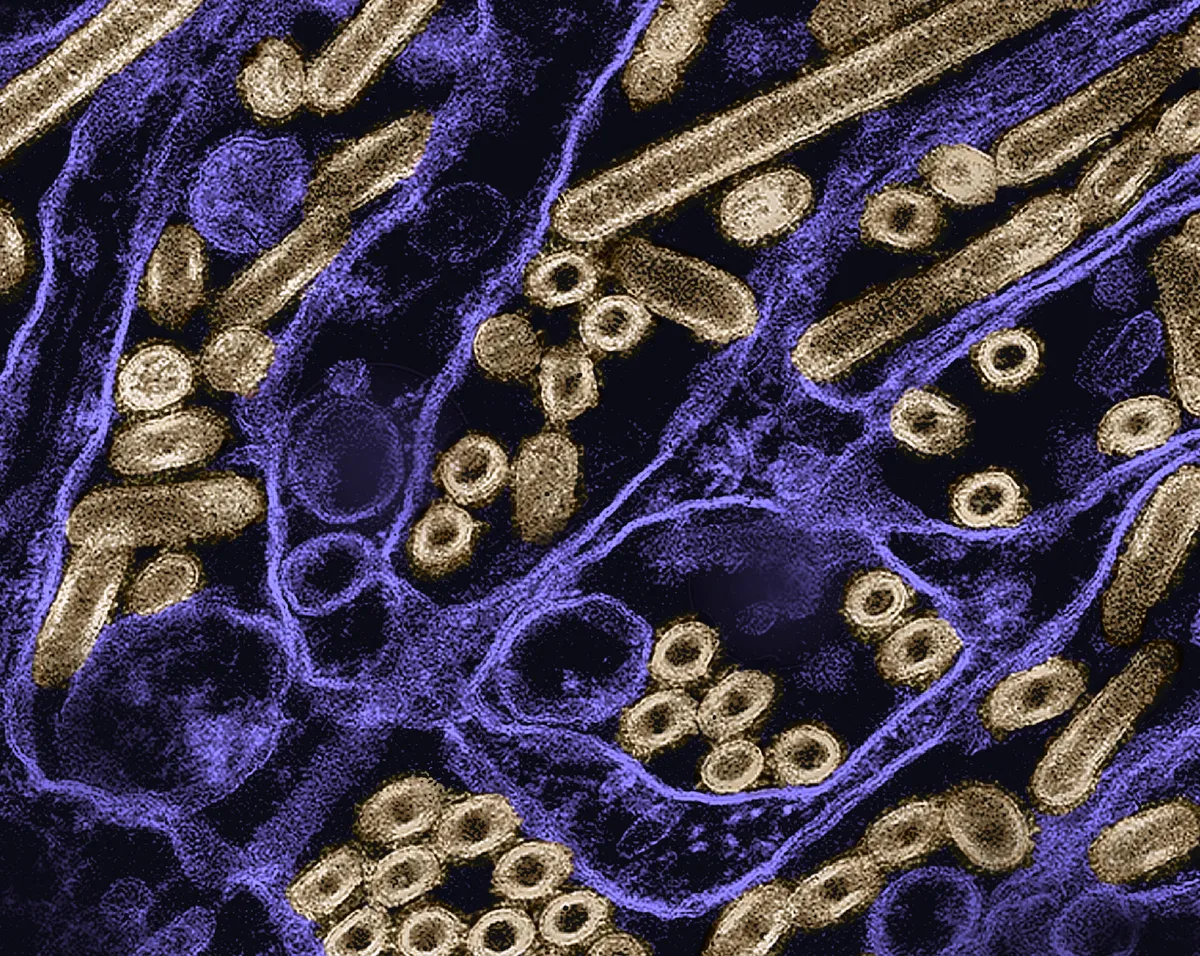
Each year, the influenza virus returns in a slightly different form, escaping the treatments made the previous season. This permanent anticipation game puts to the test of the reaction capacities of health systems. While viral mutations gradually disarm conventional strategies, research is moving towards more resilient approaches. In this dynamic, researchers are betting today on a radically different solution: antibodies against flu designed to bypass the instability of the virus.
The problem lies in the very nature of influenza. This virus is unstable, its surface proteins change regularly, which obliges to reformulate vaccines each year. The situation becomes critical when variants arising from the animal world, such as H5N1 or H7N9, against which preexisting immunity is often ineffective. In these cases, the response time is decisive. However, the manufacture of a new vaccine often takes more than six months, as recalled by the H1N1 pandemic in 2009.
In this context, the Jackson Laboratory team sought to get around this race against the watch by targeting a more discreet weak point, but much more stable over time. According to Iflscience, it is this strategic choice that could change everything.

Antibodies against flu that resist the evolution of the virus
Unlike the majority of experimental treatments tested so far, new therapy does not seek to prevent the virus from entering cells. It is based on so-called non-neutralizing antibodies, capable of recognizing a specific region of the virus called M2E. The virus keeps this portion from one strain to another, which strongly limits mutations there.
The researchers combined three different antibodies, each directed against an epitope slightly distinct from the M2E. This cocktail was administered to mice before or after their infection by various types of human or avian flu. Result, protection reaching up to 100% when the treatment is injected within the first three days, and another 60% survival even five days after the infection. Virus levels in the lungs were significantly falling, reducing both the mortality and severity of symptoms.
This strategy is based on the activation of immune cells via specific receptors, which eliminates infected cells without necessarily blocking the entrance to the virus. As the immunologist Silke Paust points out, the co-author of the study published in Science Advances, the body naturally produces a majority of non-neutralizing antibodies, but researchers have largely underestimated their potential so far.
A promising answer for the most vulnerable people
The real issue of this advance is not limited to laboratory statistics. This treatment could play a decisive role for the most exposed populations, such as the elderly or immunocompromised. For these individuals, conventional vaccines offer only partial protection and therapeutic options are rare in the event of a virulent epidemic.
The fact that this cocktail remains effective even several days after the appearance of symptoms is a major asset. It could be stored in advance, in the form of ready to use treatment, and distributed massively in the event of a health crisis. Unlike vaccines, which require strain strain adaptation, these antibodies could act immediately against unknown or zoonotic strains, as their effectiveness has shown in the H7N9 virus.
Another force of this approach lies in its absence of major side effects and its very low dose efficiency, which opens the way to wider accessibility and lower production costs. As Eurekalert recalls, the researchers observed no exhaust mutation, even after a month of repeated pressure on the virus. This result contrasts significantly with antivirals today available.
Thanks to this ability to bypass the conventional defense of the virus without triggering resistance mechanisms, the therapy developed at the Jackson Laboratory stands out as a serious option to strengthen the global response to a flu whose threat remains constant.


