
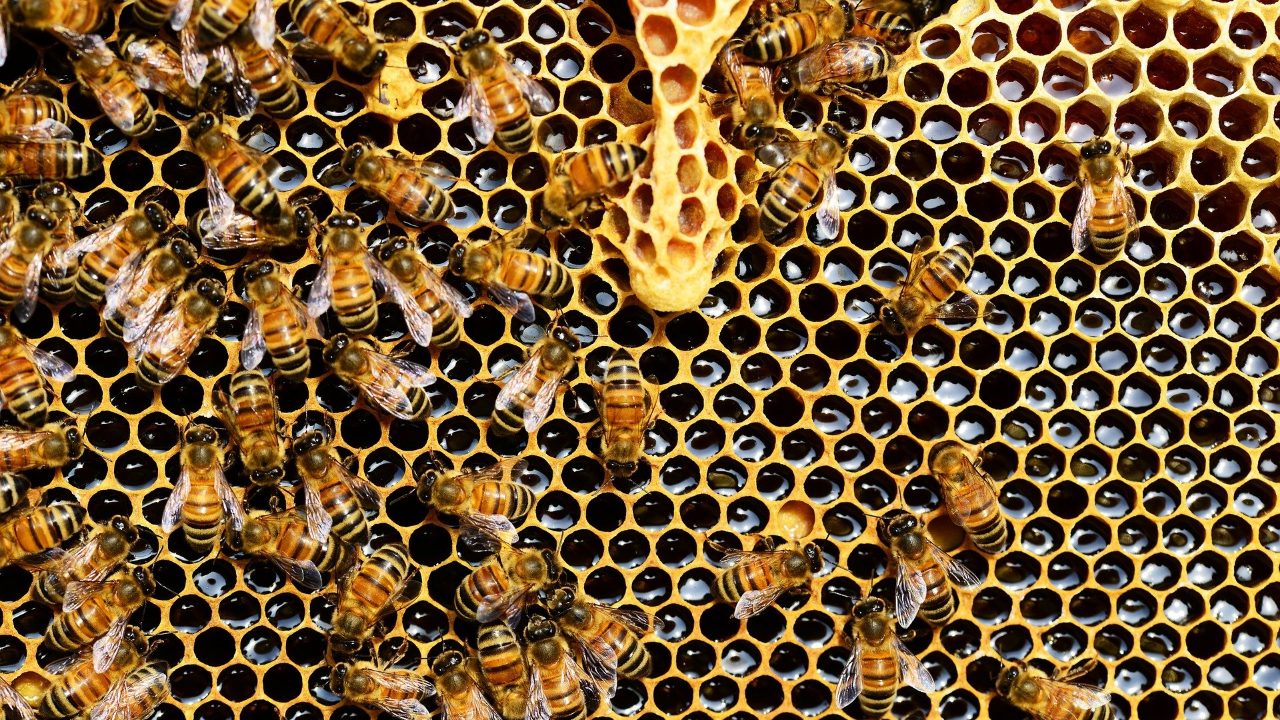

The bee colonies, essential for the pollination of many cultures, are increasingly weakened by an accumulation of biological threats. Viruses, bacteria, fungi or parasites: more than thirty pathogens have already been identified in hives, jeopardizing the health of bees and global food safety. Faced with the growing ineffectiveness of certain treatments, including antibiotics, a team of researchers from Washington College and the University of Wisconsin-Madison explored an unexpected track.
Their study, published in the Revue Frontiers in Microbiology, reveals that certain bacteria naturally present in pollen – notably endophyte streptomyces – produce active antimicrobial compounds against several pathogens of bees and plants. A discovery that could transform approaches to biological control in beekeeping and agriculture.
Microbial biodiversity underestimated in pollen reserves
The hives of melliferous bees (Apis mellifera) Store large amounts of pollen, essential source of protein for the colony. But this pollen is not sterile. In reality, it hosts a bacterial biodiversity that is still widely overlooked. And a game could play a key role in the health of bees. This is demonstrated by a team of researchers who isolated 34 strains of actinobacteria, from vegetable pollen and pollen stored in a hive.
Among these strains, 72 % belong to the genus Streptomyces, known for its ability to produce antimicrobial compounds. The simultaneous presence of these bacteria in flowers, on foraging bees and in hives, suggests a regular transfer via foraging. The bees collect not only pollen, but also the microbes that reside there.
This microbial diversity seems to depend closely on the surrounding plant diversity. A varied flora would promote the richness of beneficial bacteria available for bees. Conversely, monocultures would impoverish this invisible, but strategic resource. The composition of the pollen microbiome, so far neglected, could then prove decisive in the resilience of the colonies in the face of diseases.
Powerful natural compounds against pathogens
One of the most remarkable results of the study is based on the antimicrobial capacities of the isolated strains. Thanks to so -called “competition” tests, the researchers assessed their effectiveness against six major pathogens. Three affect bees (Aspergillus Niger,, Paenibacillus Larvae,, Serratia Marcescens) and three target plants (Erwinia amylovora,, Pseudomonas Syringae,, RALSTONIA Solanacearum).
Practically all strains of Streptomyces tested have shown significant inhibition of the growth ofAspergillus Niger. This fungus causes the disease of “stonebrood” in bees. This infection is formidable by its ability to propagate silently in the hives. It affects the larvae of bees, which mummify and harden, resembling small stones.
Certain strains have also displayed a moderate to strong antimicrobial activity against P. Larvaeresponsible for the American log. It is a fatal bacterial disease also affecting bee larvae and very contagious.
On the plant side, net inhibitions have been observed on agents responsible for bacterial burns, wilting and root rot. These pathogens represent a serious threat to global agriculture. They affect crops such as apple, tomato or potato.
Isolated bacteria produce a varied palette of bioactive metabolites. The researchers have identified specific molecular classes: Potms (polycyclic macrolalactams), surugamides (cyclical peptides), lobophores (antimicrobial molecules) and Sidophores (iron sensors). These compounds are known for their wide spectrum of action, stability and low toxicity for non -targeted organisms.
This capacity of pollen bacteria to produce natural antibiotics could bring out alternative solutions to chemical treatments, both in beekeeping and agriculture.
Plant origin and integration mechanisms into the hive
To understand the origin of these beneficial bacteria, the researchers conducted a complete genomic analysis of the isolated strains. They discovered that these Streptomyces are not passively transported microbes, but plant symbiotes, from the internal fabrics of the plants, called endophytes. Their presence in pollen grains indicates that they colonize the flowers and are then recovered by the bees during the forage.
Endophytism characteristic genes have been found in all the strains analyzed: enzymes of degradation of the vegetable cell wall, production of auxin and cytokinins (growth hormones), a synthesis of sidophores such as desferrioxamine to capture iron in the soil or in the vegetable host. These elements allow them to enter the plant tissues, survive it and actively interact with their host.
Once collected, these bacteria are “reported” to the hive and find themselves in pollen stocks. They then continue to produce antimicrobial compounds. The process is therefore entirely natural and intimately linked to fuel behavior. This is a striking example of tripartite interaction between plants, microbes and insects.
This mechanism is based on a complex, but coherent ecosystem, in which floral diversity enriches the pollen microbiome, and the latter in turn enriches the microbial defense of the hive.
A promising biological strategy for sustainable beekeeping
Current treatments against bee diseases are largely based on two antibiotics: oxytétracycline and Tylosine. Their use, often constrained, generates side effects: alteration of the intestinal microbiota of bees, risks of resistance, and contamination of wax or honey. In addition, some pathogens, as Paenibacillus Larvaehave already developed resistance to oxytetracycline, according to several studies cited in the article.
Faced with these limits, the idea of using beneficial bacteria introduced into the hive gains in relevance. By reproducing the natural process described by the team, it would be possible to strengthen the microbial immune defenses of the colonies without altering their ecological balance.
Concretely, specific strains of Streptomycesisolated from local plants or selected for their antimicrobial efficiency, could be inoculated in the hives, either via pollen, or by suitable formulations. This biological strategy, targeted and respectful of bees, would represent a serious alternative to conventional treatments.
The implications go beyond the framework of beekeeping. The same bacteria produce active compounds against major phytopathogenic agents. This opens the way to culture protection applications. These natural solutions could thus contribute to more resilient agriculture, by reducing the use of synthetic pesticides.
Finally, this approach rehabilitates the importance of a diversified floral environment. Not only to nourish bees, but to maintain a network of protective microbial symbiosis. The health of pollinators and that of cultures thus appear to be closely interconnected. All by this little -known bridge that the pollen microbiome represents.
Source: Claire Reichardt et al., “Endophytic Streptomyces from honeybee hives inhibit plant and honeybee pathogens”. Frontiers in microbiology (2025).

With an unwavering passion for local news, Christopher leads our editorial team with integrity and dedication. With over 20 years’ experience, he is the backbone of Wouldsayso, ensuring that we stay true to our mission to inform.


