
In the 19th century, shipwrecks were frequent and could condemn survivors to absolute isolation. The story of Narcisse Pelletier illustrates in a striking way what meant to be cut off from the European world and forced to integrate into a completely different universe. Party teenage from Vendée as foam on a merchant ship, he finds himself, after a maritime accident, alone on the coasts of northeast of Australia.
Where did Narcisse Pelletier come from and how did her adventure started?
Narcisse Pelletier is born in a Vendée port hosted by fishing and navigation. The sea shapes destinies from childhood. His family, not very fortunate, but deeply attached to the coast, transmitted essential maritime knowledge very early to him: wind reading, boating maneuver and sense of orientation at sea. This early immersion forges a seasoned adolescent to the work of a foam. He is capable of performing quick orders on a deck, but also to fend for himself in a demanding environment.
At the age of twelve, he joined the long run, leaving the Vendée coast for international commercial roads. After a passage on several ships, he joined in Marseille, in 1857, the crew of Saint-Paula merchant three-mast. This building carries a varied load, but especially several hundred Chinese passengers. They were recruited to join the Australian colonies during the gold rush, reports the Rochefort Marine Museum.
The crossing is long and punctuated by stopovers, especially in Bombay and Hong Kong. As the Louisiade archipelago approaches, navigation becomes perilous: incomplete marine cards, flush reefs and unstable weather. On September 30, 1858, the Saint-Paul Aleeze on the reefs of Rossel Island. The following days are marked by tension, lack of fresh water and attacks by local inhabitants. Part of the crew, including Narcisse, takes place in a boat to try to reach the Australian coast.
After twelve days of trying navigation, the group reached Cap Direction, in the far north of Queensland. There, for still uncertain reasons, the captain and the sailors leave without the young foam. They leave him injured and weakened on the beach. This moment seals the start of a complete isolation which will last seventeen years.
How did he survive and what happened during these seventeen years?
Weakened and alone on Cap Direction beach, Narcisse Pelletier first survives a few days thanks to the resources found in the immediate vicinity. But his condition gets worse. It was then that three aboriginal women, who came to seek shells, discover it. They prevent their group, a community known today as Uutaalnganu or Wanthaala. These people live on the northeast coast of Australia, in the Cape York peninsula.
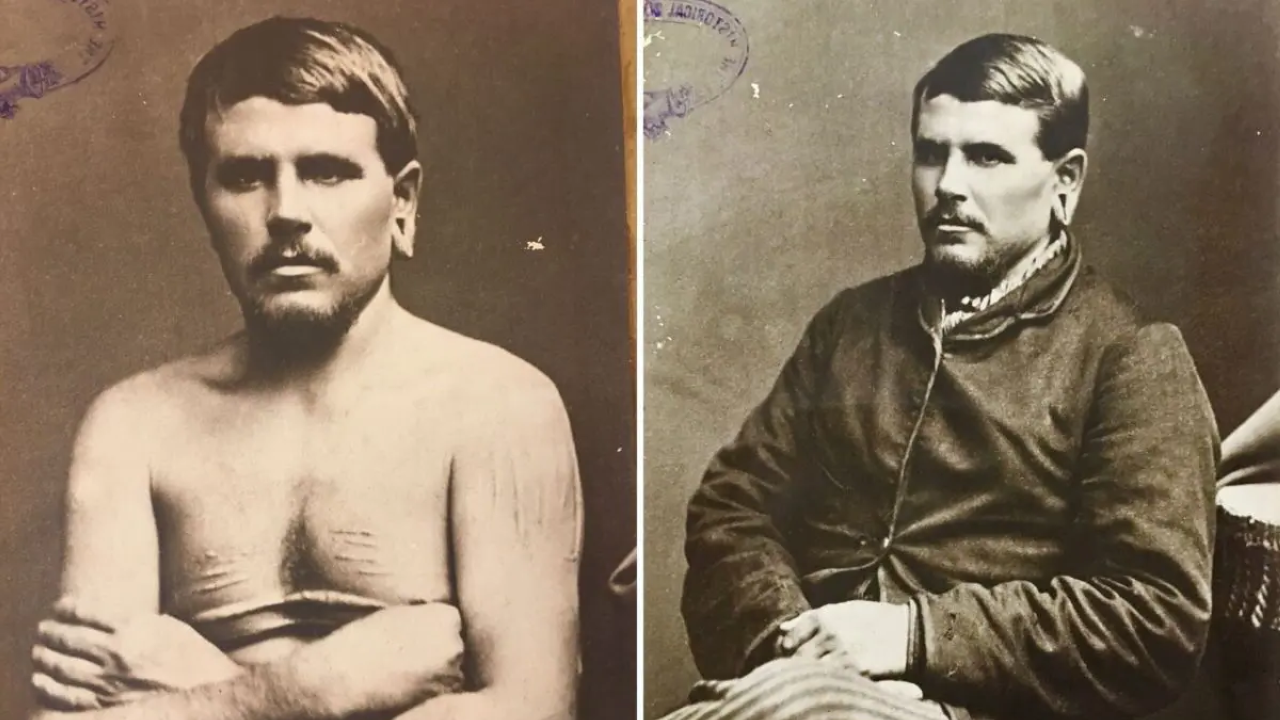
Chef Maadman decides to welcome and integrate him. Called Amglo, Narcissus gradually adopts local eating habits – fish, roots, seafood. And he learns to fish and hunt according to traditional methods. He masters the language of the group, participates in collective tasks and takes part in community rituals. Its physical transformation accelerates: ornamental scarifications, perforations of the nose and ears mark its belonging to the clan.
The European adolescent becomes an aboriginal adult. He discovered the complex social organization of this community, structured around family ties, alliances and oral laws. The knowledge linked to the territory – identifying water points, knowledge of fishing seasons, reading the tides – become for him as natural as navigation had been in his Vendée childhood.
Little by little, he stops thinking about a return. The years erase his precise memories of France and the French language. For him, Cap York is no longer a place of exile, but his home. This total integration, rare for a European of the time, testifies to a complete adaptation to an environment and a radically different culture. Especially in a context where contacts between local and foreign populations were often marked by distrust or violence.
Why did he come back to France and how was it perceived?
In April 1875, when he has lived for seventeen years among the Wanthaala, Narcisse Pelletier crossed paths John Bella British bundle ship. The crew, seeing a white man among the Aborigines, thinks of a prisoner and decides to take him by force. The members of the tribe protest, but their presence is ignored. For Narcisse, this sudden departure is a second tearing, even more brutal than its initial abandonment.
The ship leads him first to Somerset, then to Brisbane, Sydney and Noumea, before a long return to France. During this trip, he slowly resumed contact with the French language and the European world. Nevertheless, he remains deeply marked by his aboriginal lifestyle. Upon his arrival in Saint-Gilles in January 1876, he found his relatives, who believed him dead for years.
 © Departmental Archives of Vendée
Narcissus Pelletier photographed on his return to France.
Its reappearance causes intense curiosity. The French and foreign press publishes its history, insisting on its scarifications, ornaments and its “foreign” habits. This exotic look transforms Narcisse into an observation “object” more than a witness to a human experience. A Vendée doctor, Constant Merland, collects his story and publishes it in Seventeen years in the savages. It will be the first text to be described with precision the daily life and the practices of the Aborigines of Northeast Australian.
For Narcissus, rehabilitation remains difficult. The gestures of European life are foreign to him. He sits crouching on the chairs, does not support clothes and struggles to understand certain uses. Despite these obstacles, he began a new life in France. However, his identity will now remain marked by two deeply different cultures.
How was the end of his life?
After his return, the maritime administration assigns him a position as a lighthousekeeper in L'Aiguillon, near Saint-Nazaire. This work, lonely and punctuated by the tides, suits him better than a sustained social life. Later, he became chief of the hauxes and then employed in the port. In 1880, he married Louise Mabileau, but the couple had no children. Narcisse keeps a certain reserve all his life, avoiding putting himself forward. Nor will he try to capitalize on the ephemeral celebrity that the newspapers have offered him.
He died on September 28, 1894, at only 50 years old, and was buried in the Briandais cemetery, in Saint-Nazaire. His grave, recently restored, testifies to a renewed interest in his career, recalls the Vendée site.
The story of Narcisse Pelletier goes beyond the story of a shipwreck or exceptional survival. It illustrates the human capacity to fully adapt to a new environment. But also the difficulty in regaining its place after prolonged uprooting. It highlights the complex relationships between Europeans and indigenous peoples in the 19th century, often marked by misunderstandings and biased judgments.
Today, museums, historians and anthropologists are again interested in his testimony, not to make it a curiosity, but to understand, through his experience, what meant to live between two worlds. Narcisse Pelletier leaves the image of a man who fully belonged to two cultures, without ever being able to reconcile them in his own life. His destiny recalls that identity is moving, shaped by places, meetings and ruptures. And that survive, sometimes, means transforming entirely.

With an unwavering passion for local news, Christopher leads our editorial team with integrity and dedication. With over 20 years’ experience, he is the backbone of Wouldsayso, ensuring that we stay true to our mission to inform.


