
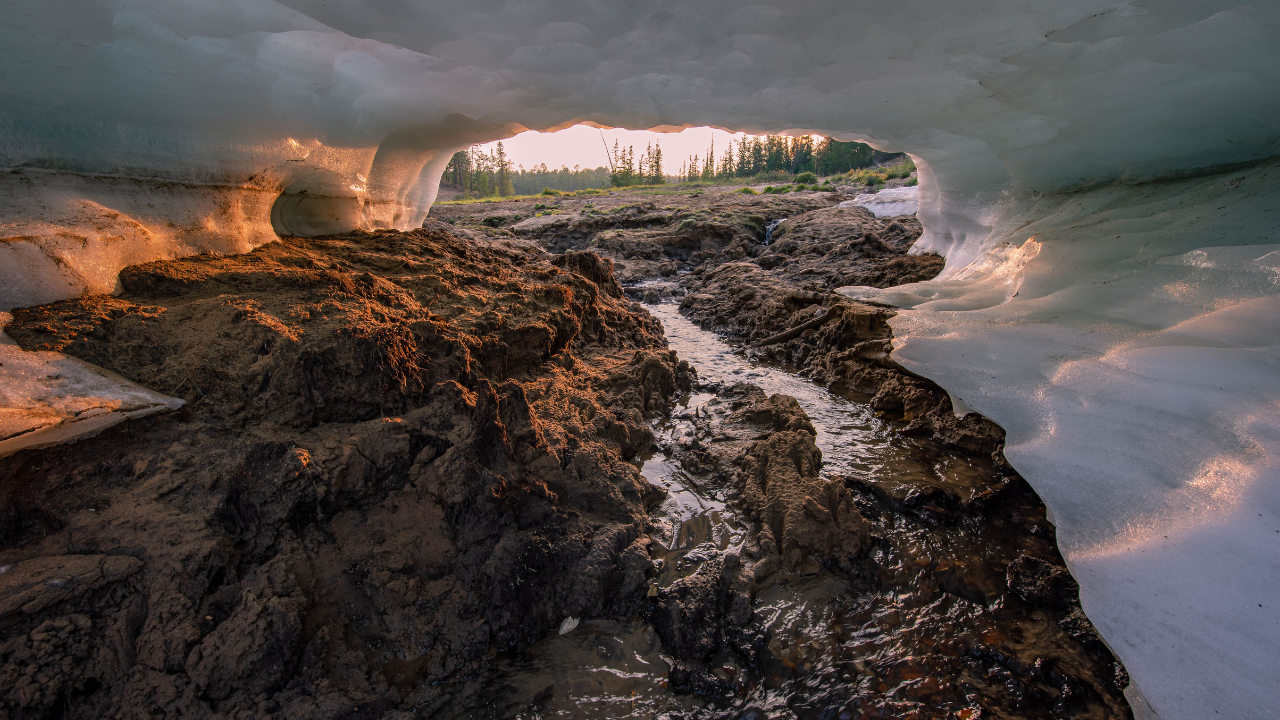

The mammoth would have been recovered from the bottom of a crevasse more than 80 meters deep, brought out from the depths of the bowels of the Earth due to global warming.
A rare discovery: a mammoth in an “exceptional preserved” state is on display in Russia https://t.co/s2P067W1Gg
— RTL info (@rtlinfo) December 23, 2024
The scientist specifies that it is absolutely unusual for such remains, the head and trunk of the young mammoth, to be found in such good condition. “Typically, the part that thaws first, especially the trunk, is often eaten by modern predators or birds”. However, the head is remarkably well preserved.
A series of discoveries due to the freezing of permafrost in Siberia
Several finds of this type have been discovered in Russian permafrost, such as those of a 32,000-year-old saber-toothed tiger, or an old 30,000-year-old wolf carcass. According to a CNRS definition, permafrost is the French word for permafrost: it is soil that is perpetually frozen, sometimes for millions of years.
This is why this series of discoveries, in addition to being particularly interesting for archaeologists, is also colossal proof of the extent of the damage caused by global warming. Still according to the CNRS, Siberia has 7.8 million km2 of permafrost.
The risks of this thaw
However, according to the IPCC report, permafrost could lose between 49% and 89% of its surface area by 2100, depending on its most pessimistic scenario. Thawing of permafrost is a problem because plant debris has accumulated there over several hundred thousand years.
However, this debris has not been damaged by bacteria and their metabolism accelerates when the permafrost thaws. Therefore, organic matter is transformed into CO2 or CH4 (carbon dioxide and methane) which are both greenhouse gases. According to estimates, permafrost contains 1460 to 1600 gigatons of organic carbon… “almost double the carbon in the atmosphere”.
In addition to this risk, the thawing of permafrost can also lead to landslides, altered drinking water quality, coastal erosion, etc. Archaeological discoveries are therefore one of the only positive consequences of this thawing.

With an unwavering passion for local news, Christopher leads our editorial team with integrity and dedication. With over 20 years’ experience, he is the backbone of Wouldsayso, ensuring that we stay true to our mission to inform.


