

[Article déjà publié en mai 2024]
A story in several stages
The fragment measuring 1m70 was found in Abydos in 2009 by the Egyptian archaeologist, Ayman Damrani in the ground of a monastery in the Abydos region, in the center of Egypt. After studying it with one of his colleagues, Kevin Cahail, they came to the conclusion that the sarcophagus having been used several times, in particular to Menkhéperr a priest of the XXI dynasty, the second time. No clue, however, on the person who occupied him the first time.
A version that did not satisfy Frédéric Payraudeau. The teacher-researcher in Egyptology at Sorbonne University therefore decided to embark on his own research. According to him, the inscriptions present on the fragment had not revealed all their secrets.
A work of deciphering sarcophagus
He therefore asked for an image of the sarcophagus fragment to his colleagues in order to be able to study it more easily. But a first obstacle put itself on its way to Frédéric Payraudeau: the two names of the people whose bodies had rested in the sarcophagus were almost illegible because written in the same place.
The analysis carried out during the 2017 study had not managed to decipher the name below. Ayman Damrani and Kevin Cahail thought it was a prince. The drawings made on the fragment of granite immediately returned the Egyptologist Sarthois to a very famous text named The book of doors. This is only present on royal sarcophagi.
In addition, Frédéric Payraudeau is used to reading hieroglyphs. It was therefore not difficult for him to distinguish the two names registered. The one below corresponded to the name of Coronation of Ramses II.
A happy ending
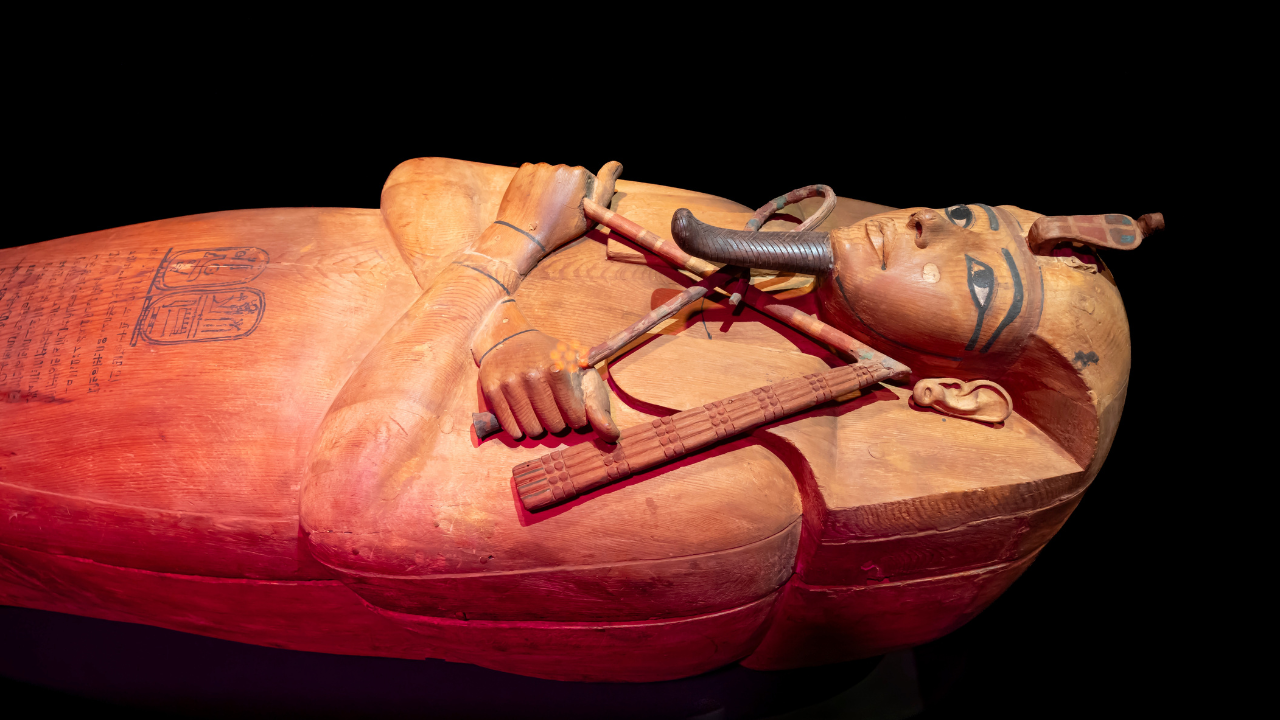
You should know that the tomb of Ramses II had been pillaged. The mummy has therefore been preserved since in a wooden sarcophagus. But at the time, the pharaohs had the custom of being buried in several sarcophagi which were fitted with each other.
After having identified where and who belonged to the sarcophagus fragment, Frédéric Payraudeau came from and who decided to bring him back to Abydos, in the Valley of Kings, where many Egyptian kings having lived between -1539 and -1069 still rest. The mummy of Ramses II, on the other hand, is exhibited in Cairo, at the National Museum of Egyptian civilization

With an unwavering passion for local news, Christopher leads our editorial team with integrity and dedication. With over 20 years’ experience, he is the backbone of Wouldsayso, ensuring that we stay true to our mission to inform.


