

Nothing seems more banal than a foam that forms, spreads and then disappears. However, behind this apparent simplicity lies a mechanism that is much more complex than it appears. On a microscopic scale, each bubble interacts with its neighbors in an unstable equilibrium, sensitive to the slightest stress. By precisely studying the drainage of moss, physicists have uncovered an unexpected behavior that calls into question the models established for several decades.
The foam, a miniature extreme physics laboratory
It seems innocuous, almost familiar. However, a simple foam made of tiny bubbles hides a formidable testing ground for the physics of soft matter. Neither completely liquid, nor completely solid, nor completely gaseous, it absorbs, isolates, transports. From household products to fire extinguishers, including shaving foam and mining processes, its presence crosses many industrial fields.
For several decades, physicists thought they had unlocked its secrets. The behavior of these structures was notably explained by a theory based on osmotic pressure, supposed to determine the threshold at which the foam begins to lose its liquid. However, this theoretical approach came up against a persistent contradiction. In the laboratory as in everyday life, foams of only a few tens of centimeters empty much more quickly than predicted by the models.
A Japanese study published in 2025 in the Journal of Colloid and Interface Science took this inconsistency head on. By recreating different types of foam in a transparent cell, the researchers followed, minute by minute, the internal movements of the bubbles and the behavior of the surrounding liquid. What they discovered shakes up the very foundations of foam physics.
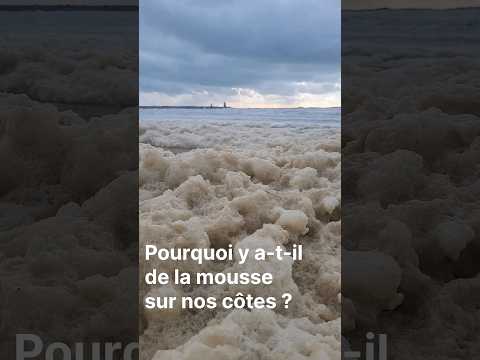
What foam drainage reveals about bubble organization
When the bubbles form, they fit into each other to the point of blocking the circulation of liquid between them. A dense and frozen network where matter seems paralyzed. Until now, we imagined that the liquid escaped only by sliding between these immobile bubbles, like a fluid passing through a filter. This hypothesis has just been refuted.
By carefully observing the moment when the foam begins to drip, the Japanese team noticed an unexpected shift. The bubbles then begin to move slightly, changing their arrangement. It is these subtle movements, induced by the pressure of the liquid, which unblock the situation. In other words, it is not simply the gravitational force that pushes the liquid out, but the ability of the system to give way, to reorganize its internal structure.
According to SciTechDaily, which relayed the results of this experiment, this discovery requires an in-depth review of the understanding of moss drainage. The tipping point does not correspond to a theoretical value of osmotic pressure, but to what physicists call a threshold stress. The pressure level beyond which the bubbles are willing to move. This internal stress, long neglected, therefore becomes the determining element in the behavior of the foam.
An unexpected analogy with blood, tissues and emulsions
The scope of this discovery goes far beyond the field of foaming products. The foam in fact shares a fundamental behavior with other complex systems: biological tissues, colloidal suspensions or even industrial emulsions. All these environments present a dense and dynamic organization, where individual elements can fit together to the point of preventing any movement, until internal or external pressure causes a sudden reorganization.
In blood vessels, for example, certain pathological situations give rise to comparable states. The Japanese study suggests that similar rearrangement mechanisms could explain certain properties of blood flow, particularly under extreme conditions. Likewise, in the field of creams, gels and emulsions, a better understanding of these mechanical transitions would make it possible to design more stable products, capable of releasing or retaining a liquid according to predefined thresholds.
By highlighting a phenomenon as fine as the spontaneous reorganization of bubbles under stress, researchers have opened a gap in the classic modeling of soft materials. A seemingly banal foam turns out to be capable of responding to requests dynamically, like a living or intelligent system. This hitherto invisible behavior could thus become a new key to understanding (and manipulating) matter in contexts as varied as biology, the pharmaceutical industry or intelligent materials.

With an unwavering passion for local news, Christopher leads our editorial team with integrity and dedication. With over 20 years’ experience, he is the backbone of Wouldsayso, ensuring that we stay true to our mission to inform.


