

[Un article de The Conversation écrit
par Thierry Gauquelin – Professeur émérite, Institut méditerranéen
de biodiversité et d’écologie marine et continentale (IMBE),
Aix-Marseille Université (AMU) & Mathieu Santonja – Maître de
conférences en écologie des sols, Aix-Marseille Université
(AMU)]
We sweep them away, we blow them, we sing of the melancholy of their inexorable fall. Autumn is the season of dead leaves that we collect by the shovel, which we sublimate through many poems and songs. What is perhaps less well known is the crucial role these falling leaves play in plant growth, carbon sequestration, and the rich biodiversity they inhabit. Before thinking, perhaps, of raking your fall garden to rid it of all this pile of leaves which grows as winter approaches, keep in mind that a healthy ecosystem knows how to get rid of these leaves, which are very useful to it. Here's how.
The fuel of forest ecosystems
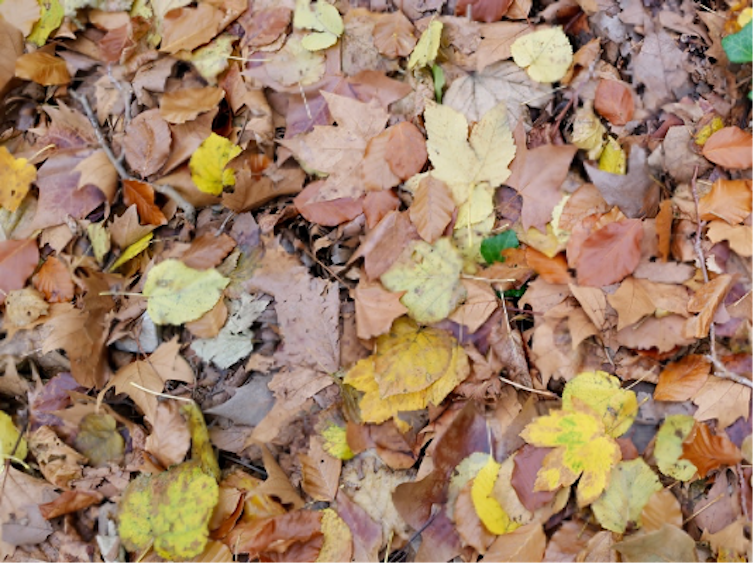
Whether evergreen or deciduous, the trees in our forests or in our parks and gardens all lose, at some point, their leaves which fall to the ground and constitute what we call litter. The same goes for plants found on lawns or meadows. In the forest, the quantity of litter arriving on the ground each year varies, but reaches several tonnes per hectare, or several hundred grams per m2. No one sweeps or blows these impressive quantities of dead leaves, which will gradually disappear. In fact, under the action of the climate (heat, humidity, cold) and a multitude of organisms, this litter decomposes more or less quickly, mineralized in part, transformed into humus – organic fraction of the soil – in another.
It thus constitutes the fuel for the functioning of the forest ecosystem, allowing on the one hand during its mineralization the return to the ground of the mineral elements contained in these leaves (nitrogen, phosphorus, calcium, magnesium, etc.) essential to the development of trees and on the other hand, via humification, the enrichment of the soil with organic matter participating in the sequestration in the soil of the carbon contained in this organic matter. The speed and the finished product of this transformation, however, remain strongly dependent on the type of climate and the subsoil depending on whether it is, for example, limestone or granite. But also, of course, depending on the species present. Softwoods will have litter that is less easily decomposable than that of deciduous trees, or deciduous trees, which lose all their foliage in the fall.
In the litter, a diverse and essential fauna
Invited into this process of decomposition is an innumerable, poorly known and mysterious cryptic biodiversity, ranging from arthropods measuring a few millimeters such as mites, pseudoscorpions or springtails to bacteria and fungi measuring a few micrometers. We thus find, in a forest floor, up to 500,000 springtails per m2or more than 1 billion individuals per hectare. With all the mites from one hectare of forest, it is possible to make a pile of 600 kg even though they each weigh only a few micrograms. In the same way, earthworms from this same hectare can represent a pile of 2 tonnes. Concerning microorganisms, we consider that we could count up to 1 billion bacteria in one gram of soil. Without all these organisms which do not maintain privileged or emotional relationships with humans, ecosystems and agrosystems would no longer function.
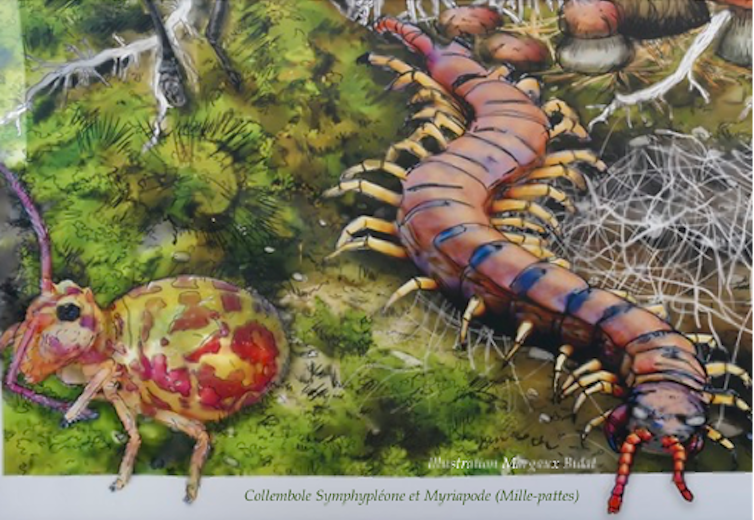
Springtails, for example, some species of which are well known for escaping predators by somersaulting, consume dead leaf debris. They also stimulate the development of tiny fungi called “mycorrhizal”, which live in symbiosis with the roots of plants by supplying them with nutrients, regulate the populations of microorganisms and transport them through the litter, which makes them, in a way, “keystone species of forest soils”.
Litter and type of humus in the forest
The way in which this litter decomposes depending on environmental parameters leads to humus in the forest with very different morphological and physicochemical characteristics (acidity, organic carbon content, nutrients, etc.). We can thus differentiate three main types of humus observable in temperate forests: mull, moder and mor.
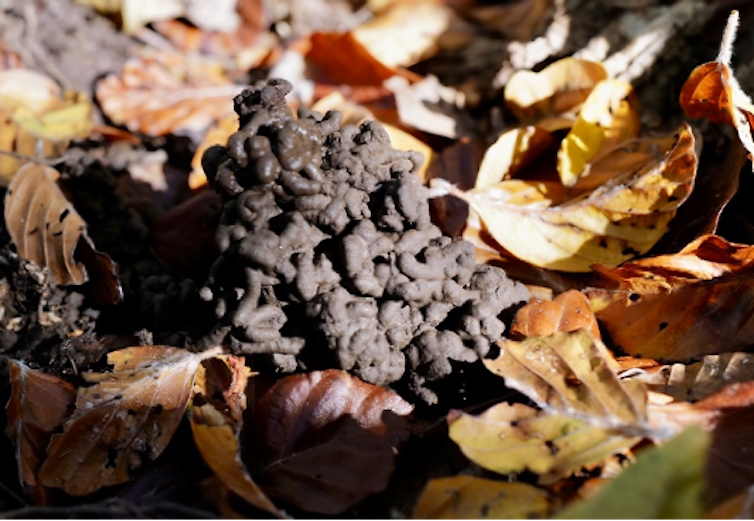
Mull is the most active humus. It is a competitive humus. The decomposition of the litter and the incorporation into the soil of this organic matter which is transformed little by little to acquire properties different from the initial raw material, is carried out perfectly well. Earthworms described as anecic which yoyo between the depth of the soil and the surface where their droppings contribute to the intimate mixture between organic matter and mineral matter which accompanies this incorporation. Leaves that fall to the ground decompose quickly and, in the best case scenario, all the litter that fell to the ground in the fall will be completely gone by the following fall.
For a mull, you of course need favorable conditions: no mull in high mountains because it is too cold and the processes are slowed down; not too much humidity either because the organisms will be suffocated. But you also need litter that will be easily degraded, and which will therefore be palatable for decomposer organisms. Leaves rich in nitrogen, which bacteria love, are, for example, more easily degraded than hard leaves rich in lignin, tannins, and antibiotic substances which, by definition, will repel microorganisms and other leaf consumers. There are therefore so-called improver plant species which will facilitate the formation of a mull type humus, if the climate allows it and others qualified as acidifying because they are rather the origin of a mor type humus.
Mor, conversely, is humus, the most acidic and the least active. It is found, for example, in the Landes forest with its pines and heather with refractory litter or even in cold high mountain forests. The litter decomposes very painfully, accumulating, forming a very thick horizon, either felted or flaky, somewhat like peat. The acidity of the parent rock of the Landes massif does not help matters. Earthworms are absent and fungi take over from bacteria in an almost suspended time.
When we transform a pretty beech forest into a spruce plantation, as was often done more than sixty years ago in the Pyrenees, we risk gradually changing the humus from mull to moder, or even mor. We must therefore avoid moving from a forest of deciduous deciduous trees with easily decomposable litter to a forest (or plantation) of evergreen conifers causing litter which is much less so.
The moder, for his part, is intermediate between mull and mor, while knowing that, between mull, moder and mor, everything is organized according to a gradient which the classification between very distinct categories does not account for.
On the need for mixed forests for mixed litters
A good litter is also a diverse litter, made from different species of plants.
Today, we rightly emphasize the need for mixed forests to mitigate the impact of climate change. For this, the decomposition of litter and the formation of humus still remains a key process. The level of resilience to summer drought of Mediterranean forests could, in this regard, be precisely studied. After a particularly dry summer, plots with only one forest species, oak, saw their springtail populations drop by 75%, compared to only 40% in those combining oak with four other tree species. Likewise, a litter decomposition experiment carried out at the O3HP experimental site in the Alpes de Hautes Provence was able to demonstrate that the presence of several plant species in the litter mixture strongly attenuated the negative impact of an amplified summer drought on the decomposition process and the provision of carbon and nitrogen in the soil. Results which add to the countless scientific arguments attesting to the ecological benefits associated with greater diversification of forests.
The need not to disrupt or break virtuous biogeochemical cycles
Good litter is also, in the forest, litter that is not too exposed to the sun. For this reason, clear felling, that is to say the felling of all the trees on a plot, undermines the health of the soil, making it vulnerable to light, but also to bad weather and removing any possibility of organic matter and mineral elements returning to the soil for several years.
Logging, and its heavy machinery, also leads to compaction of litter and soil, certainly leading to mechanical degradation of litter, but at the same time strongly disrupting the physico-chemical and biological properties of the soil. Because the soil organisms present in forest soils do not like to be exposed to direct sunlight or compressed under the wheels and tracks of logging equipment. In addition, water no longer infiltrates as easily into the ground, leaving room for strong runoff which carries away dead leaves and organisms in its wake…
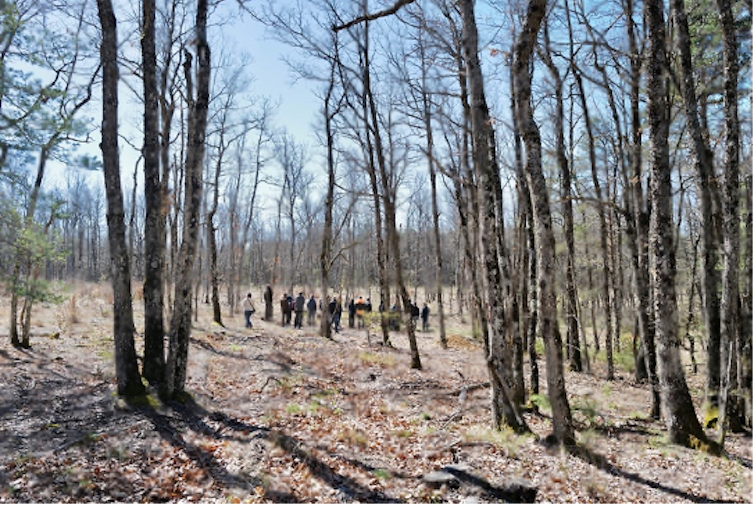
Thinning, leading to a reduction in the density of trees in stands, is one of the solutions considered in the adaptation of forests to climate change, having little or no effect on the litter layer, provided that the cutting is low or moderate. Since 2021, an international consortium has been working to study this question as part of a European project, including an experimental site in the south of France at the edge of the downy oak. The trees that remain standing will suffer less from competition for access to resources (light, water, nutrients) with their remaining neighbors and will even see their biomass and foliage increase, thus allowing the same quantity of leaves to always fall to the ground in the fall.
In gardens or parks, keeping dead leaves on site under and near trees also helps promote the good health of the soil and therefore its permeability and water retention, and ultimately helps us better combat urban heat islands. Because the role of trees at this level is of course direct but also indirect through the soil that accommodates them.

With an unwavering passion for local news, Christopher leads our editorial team with integrity and dedication. With over 20 years’ experience, he is the backbone of Wouldsayso, ensuring that we stay true to our mission to inform.


