
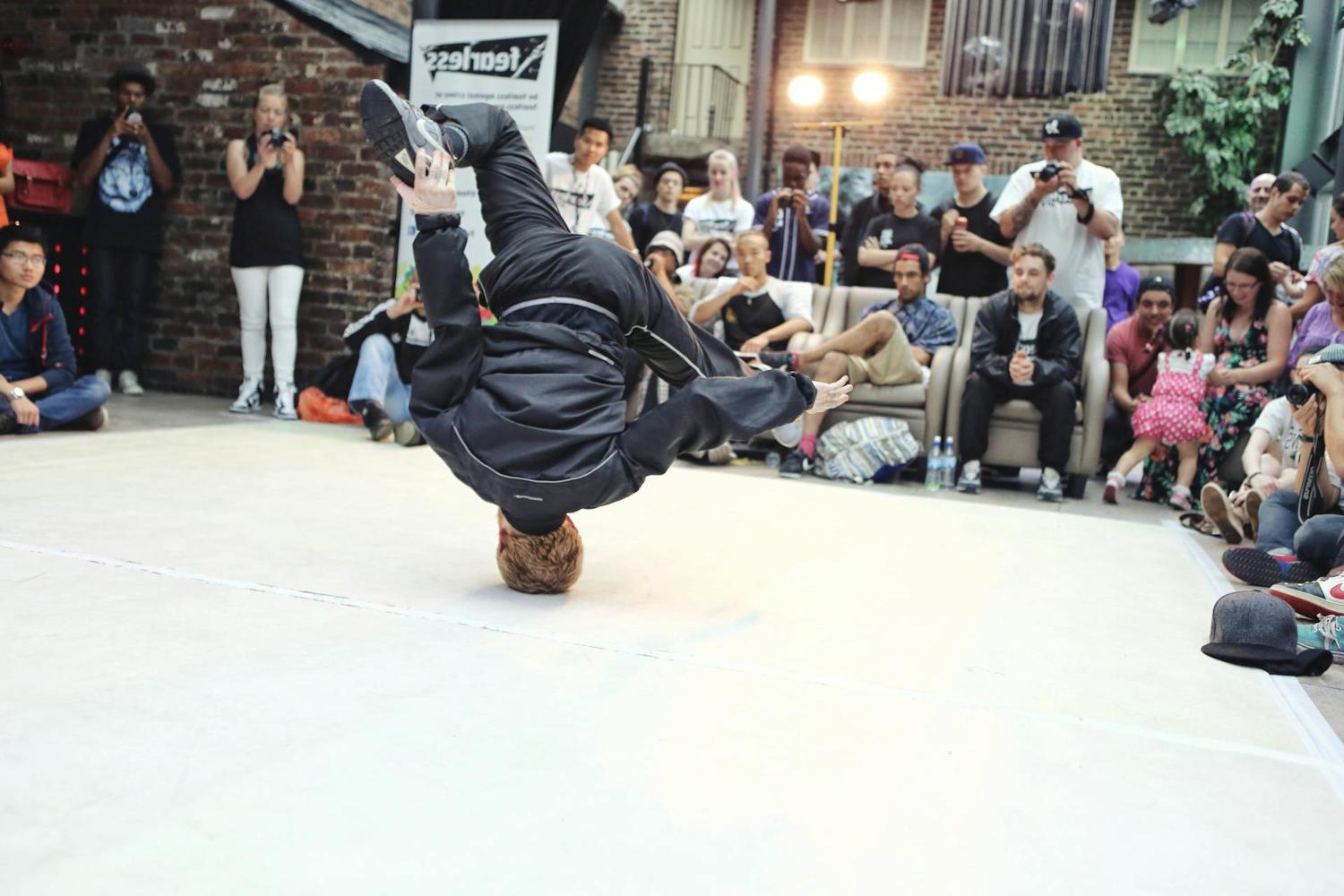
Breakdancing made its debut at the Olympic Games this year, probably sparking new vocations. Two neurosurgeons at Copenhagen University Hospital, however, warn of ath consequence unknown of this practice. “Headspin”, which consists of rotating the body while resting on the head, can cause, in the long run, a “hole” characteristic. They illustrate this effect through a clinical example presented in the journal BMJ Case Reports.
Breakdancing is not new: this dance began to develop in the United States in the 1970s. It combines hip-hop culture, acrobatic movements and footwork. International and national competitions have been regularly organized since the 1990s, in the form of “ battles “. This year, the discipline even made its debut at the Summer Olympics – providing a silver medal to France, won by Danis Civil.
This dance is characterized by its rapid and jerky body movements and its figures on the ground (the “ downrock “). These acrobatic figures can be static (“the freezes “) or presented in the form of circular movements (the “ power moves “). To perform them, the dancer supports his upper body (hands, elbows, shoulders, head). Among these movements: the “ headspin “, which consists of balancing on the head, while rotating along the vertical axis of the body. Doctors warn of the risks associated with this rotation.
A “potentially high-risk” sport
Breakdancing is a very demanding discipline, which requires a sense of rhythm, creativity, but also great muscular strength, balance and good coordination. Practitioners must produce brief but intense bursts of power and maintain sustained cardiorespiratory activity. Due to these physical demands and the complexity of the movements, breakdancers are particularly exposed to musculoskeletal injuries. These risks were highlighted in the 1980s.
Past epidemiological studies report incidences of more than 4 injuries per 1000 hours of practice. By comparison, there are 1.33 injuries per 1000 hours for other dances.
Sprains, strains and tendinitis are particularly common. They affect all joints, the wrist being the most commonly affected. The ankle and knee come in second and third place. Fractures (of the clavicle, radius, ulna, etc.) are less common, but not rare. Head and brain injuries, including subdural hematomas (collection of blood between the skull and brain), have also been reported.
Additionally, prolonged practice often results in what doctors call “burnout syndrome.” This manifests itself in various conditions, such as carpal tunnel syndrome and swelling and inflammation of the tendons (tenosynovitis). Scalp irritation may also be observed. Note that, due to the repeated impacts with the ground, breakdancing is sometimes described as a contact sport.
“ Breakdancing should be considered a potentially high-risk dance sport. Even with serious injuries, dancers only stop training for limited periods », concluded a study published in 2009, in The American journal of Sports Medicine.
Two Danish doctors today present a little-documented breakdancing injury, which is added to the discipline's long list of risks. This is the “headspin hole”, also called the “breakdance bead”.
A lump under the skin, accompanied by hair loss
This overuse injury, specific to breakdancers, appears in the form of a protuberance on the scalp. It is often accompanied by hair loss (alopecia), while the area becomes soft and numb. It results from the repeated execution of rotations while resting on the head.
As the literature on this condition is limited, Mikkel Bundgaard Skotting and Christian Baastrup Søndergaard, from Copenhagen University Hospital, present the case of a patient suffering from such a “headspin hole”. The man in question is around 30 years old and has been breakdancing for over 19 years. He developed a visible protuberance on his scalp after five years of intensive practice of head spinning.

MRI of the man showing a mass located under the skin and on the bone of his skull. Credits: Bundgaard Skotting et al., BMJ Case Reports (2024)
He said he practiced these movements five times a week, for about an hour and a half. During these sessions, the top of his skull was subjected to direct pressure for 2 to 7 minutes, report the two doctors. Despite the loss of his hair and the appearance of a lump on his scalp, the man maintained his training. He finally decided to consult when the protuberance grew and his scalp became abnormally soft.
An MRI scan showed significant subgaleal fibrosis – a buildup of scar tissue in the space between the periosteum of the skull and the epicranial fascia. Imaging also revealed thickening of the skin around the lump. These signs correspond to the “cone head sign”, described for the first time in 2020. Histological analysis confirmed that this fibrosis was not cancerous.
Surgeons removed the lump, but the surrounding skin tissue retained its thickening. The patient was nevertheless happy with the result. He felt able to go out in public again without having to wear a cap. In addition to the aesthetic improvement, removal of the fibrous mass relieved the symptoms.
A common condition, but still little documented
Doctors first described the breakdancer's “headspin hole” in 2009, in a German magazine (Sportverletz Sportschaden). Of 106 dancers surveyed at the time, 64 suffered from “scalp overwork” due to headspin. Nearly a third of them experienced hair loss and just under a quarter had a painless bump on their head. There were 42 of them reporting scalp inflammation. However, the study authors did not report any MRI findings or imaging features.
To date, apart from the case presented by Bundgaard Skotting and Baastrup Søndergaard, only one other case has been detailed, in 2020. This involved a 38-year-old man who presented for a brain MRI due to dizziness. He also had concomitant nosebleeds, which had been present for several years. The patient reported a chronic palpable lump on the top of the head, associated with hair loss and tenderness.

MRI results of a breakdancer with a “headspin gap”. Credits: Korczynski et al., Radiology Case Reports (2020)
The MRI revealed deep thickening of his scalp and a cone-shaped deformity. The man had been breakdancing since the age of 15, and regularly performed headspins. After six months, the clinical visit showed the disappearance of nosebleeds and dizziness.
“ Radiologists and clinicians should be aware of the clinical presentation and radiological findings to avoid unnecessary biopsy and/or other inappropriate investigations », concluded the doctors who described this case. Same conclusion issued by Danish specialists: “ [Notre] case highlights the importance of recognizing chronic scalp conditions in breakdancers and suggests that surgery may be an effective treatment “.

With an unwavering passion for local news, Christopher leads our editorial team with integrity and dedication. With over 20 years’ experience, he is the backbone of Wouldsayso, ensuring that we stay true to our mission to inform.


