
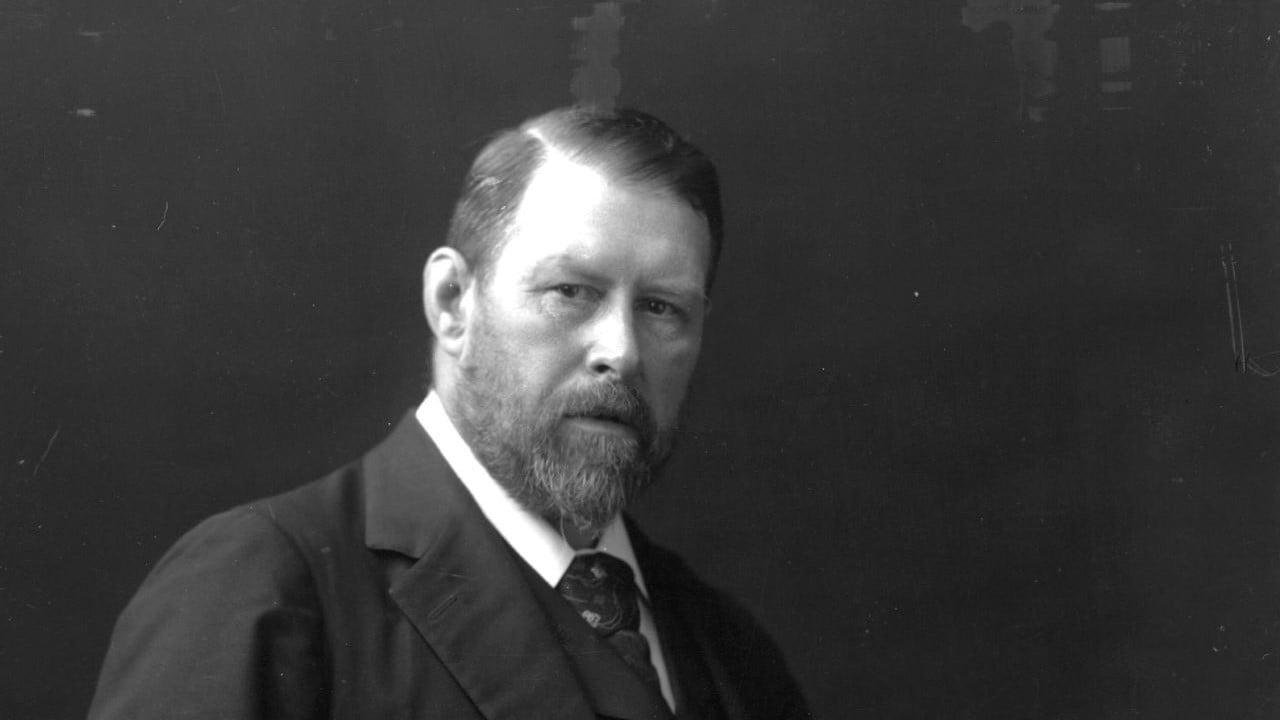

On the occasion of the release of Dracula by Luc Besson on July 30, the interest in the famous vampire returns to the front of the stage. However, behind this character who has become a symbol of popular culture, hides an Irish writer whose journey remains largely unknown. Bram Stoker, author of the novel published in 1897, was neither a traveler from Eastern Europe nor a horror specialist.
A sick but fruitful childhood
Bram Stoker was born in 1847 in Clontarf, in the northern suburbs of Dublin. Very early on, his failing health sentenced him to immobility. Until seven years, he can neither walk nor participate in the active life of his brothers and sisters. This prolonged isolation pushes him to develop an intense inner life. He observes, listen, imagine. Far from the school during his first years, he received a home education, mainly provided by his mother, Charlotte Thornley Stoker. She plays a decisive role in her intellectual training. Subscription of the cholera epidemic of 1832, she nourished the imagination of her son with frightening stories, tinged with local history, Celtic myths and macabre anecdotes. These first stories, anchored in the Irish collective memory, awaken in him a lasting interest in the supernatural and the archaic fears.
This environment, combined with physical confinement, pushes Bram to read with voracity and write very young. He begins to hold notebooks, to record impressions, to invent characters. The fragile child develops an exacerbated sensitivity and a rare analytical capacity. Then, towards adolescence, a spectacular improvement in his health upsets his existence. He becomes an accomplished sportsman, excelling in weightlifting and background. But this body metamorphosis does not erase years of confinement. He keeps a taste for observation, a certain distance from his peers, and a fascination for invisible forces – so many elements that will feed the mental universe of Dracula.
A romantic bureaucrate and fan of Walt Whitman
Once graduated in science and mathematics in Trinity College in 1870, Bram Stker joined the British administration in Dublin as a clerk at the castle. Officially, he leads an ordinary, methodical life, punctuated by relationships and procedures. However, behind this bureaucratic daily life is developing an intense inner world, nourished by an unexpected literary passion: Walt Whitman. Discovered through a censored edition of Leaves of Grassthe American poet becomes for Stoker much more than an admired author. He embodies a form of radical freedom, assumed authenticity and filter -free sensuality. Everything that Victorian Ireland repressed.
At 24, in a night impulse, Stoker wrote a letter of almost 2,000 words to Whitman, which he describes as a “real man” and a “comrade”. He delivers a physical and moral self -portrait of a rare franchise, evoking his solitude, his thirst for ideal and his virile aspirations. Although he first kept this secret letter, he ended up sending it in 1876. Whitman, flattered and touched, replied with warmth. A friendly and sincere correspondence sets in, punctuated by late meetings during the American tours of Stoker.
Whitman's influence goes beyond the intimate sphere. According to several researchers, the aura of the poet – powerful body, long hair, fascination for death and eroticism – is transposed into the character of Dracula. More than a discreet tribute, this literary projection reflects the ambiguous desires and the hidden tensions of the young official who has become a writer.
Henry Irving's theater and darkness
In 1878, Bram Stoker abandoned his administrative career in Dublin to follow Henry Irving in London. Irving, then at the peak of his fame, is a star of the Victorian theater, celebrated for his Shakespearian roles. Stoker becomes his personal secretary and especially the administrative director of the prestigious Lyceum Theater. This intense collaboration will last a quarter of a century. During these years, Stoker organized the smallest details of Irving, London in New York. He plans, negotiates, writes tirelessly-without ever accessing the lights of the spotlight.
This relationship, imprint of devotion, intrigues historians. Stoker, married and father of a son, seems entirely absorbed by this dominating man, demanding, sometimes cruel. In Personal reminiscences of Henry Irving (1906), he portrayed his friend as a visionary genius. However, several biographers read ambiguous admiration, mixed with submission. Dacre Stoker, his descendant, even evokes a form of emotional dependence. Irving, in return, never seems to have granted Stoker a real artistic recognition. This latent frustration, nourished by fascination and humiliation, may well have helped shape the figure of Dracula. He shows himself a charismatic, manipulator, hypnotic being, both attractive and terrifying.
In parallel, this total immersion in the theater gives Stoker a precious mastery of the scenic narration. He learns to punctuate a story, think about atmospheres, play on waiting and revelation. The novel Draculastructured as a succession of intimate newspapers and testimonies, owes a lot to this learning of drama behind the scenes.
Forgotten inspirations: Vlad the Empleur and Emily Gerard
In 1881, when he began to bring together the documentation that will nourish DraculaBram Stoker discovers the figure of Vlad III, known as the empaleur, bloodthirsty prince of Valachia in the 15th century. Fascinated by the brutality of this historical figure, it retains its name, its taste for cruelty and its geographic origin. However, Vlad provides only part of the material. The true background of vampiric myth, Stoker draws it elsewhere. He draws it from the ethnographic writings of Emily Gerard, recalls The Guardian.
Scottish writer and wife of an Austro-Hungarian officer, Gerard published in 1888 The Land Beyond the Foresta rare and documented testimony on popular beliefs in Transylvania. She describes protective protection practices, the use of garlic, decapitation rituals, the local term “nosferatu”. These elements, Stoker integrates them bluntly into his novel, especially through the words of Professor Van Helsing. It even goes so far as to move the place of action initially located in Austria to Transylvania, a region made more worrying by Gerard's accounts.
Long relegated to the rank of a simple documentary source, Emily Gerard is today an indirect co-architect of the universe of Dracula. Its contribution is essential to the construction of an imaginary which mixes exoticism, superstition and collective anxiety. By giving its place to this female and erudite voice, reading Dracula nuance. The stoker vampire, far from being an isolated invention, is the product of a network of complex influences, mixing history, theater, poetry … and Transylvania told by a woman.

With an unwavering passion for local news, Christopher leads our editorial team with integrity and dedication. With over 20 years’ experience, he is the backbone of Wouldsayso, ensuring that we stay true to our mission to inform.


