
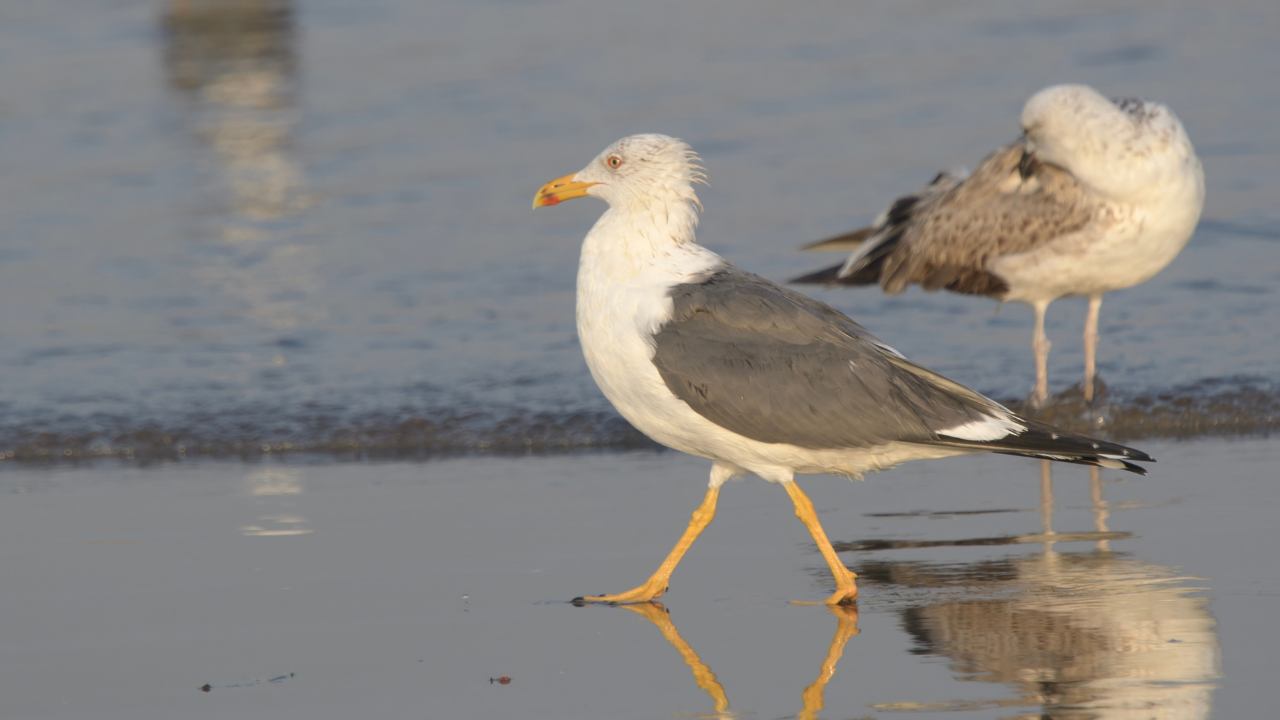
Since 2022, the highly pathogenic H5N1 avian flu has caused a massacre among seabirds, decimating entire colonies at an unprecedented rate. Long confined to farms, this epidemic has now reached a critical milestone: it is hitting wild species head-on, from the Breton coast to the sub-Antarctic islands, aggravating a situation already weakened by overfishing, pollution and warming of the oceans. This ecological crisis, as massive as it is silent, remains largely ignored in public policies.
An epidemic out of control on a global scale
For 3 years now, the H5N1 avian flu has spread at lightning speed through wildlife. Long confined to livestock farms, the virus has now reached a decisive stage: it is massively colonizing natural ecosystems. The epidemic today affects all continents, with the exception of Australia, according to the Pasteur Institute. The American case is emblematic with more than 168 million poultry slaughtered since 2022 and unprecedented transmission to cattle, confirmed by the WHO in May 2024.
 © Nature Production
But it is in wildlife that the consequences prove to be most lasting. In France, the Sept-Îles gannet colony lost nearly 80% of its breeding adults. In Glénan and the North, sandwich terns have been decimated. “Since 2022, the highly pathogenic H5N1 avian flu pandemic has affected bird populations across the planet,” recalls Allain Bougrain-Dubourg. “ The virus is now present in the TAAF, where it affects both birds and marine mammals “.
In Antarctica, cases have been detected in Adélie penguins and Atlantic cormorants, a first for this hitherto spared continent. In Norway, 25,000 kittiwakes died in one season. For Allain Bougrain-Dubourg, the situation is alarming. “ H5N1 avian flu is no longer just a threat to livestock. It is a major ecological crisis which permanently weakens already vulnerable wild populations. “.
Sentinel species sacrificed in the shadows
Seabirds are key indicators of the state of the oceans. Their longevity, low reproduction rate and dependence on fragile ecosystems make them vulnerable. But their decline remains largely ignored. “ We pay more attention to what is close to us, and the ocean belongs to no one », deplores Allain Bougrain-Dubourg. “ The death of seabirds offshore or on inaccessible cliffs remains an invisible tragedy “.
Since 2021, 21 nesting species in the United Kingdom have been affected, recalls the Royal Society for the Protection of Birds. In 2023, 30,000 black-headed gulls will die, or 10% of the national population. Kittiwakes, guillemots and terns are also being hit hard. On Hornøya, no guillemot chicks have been observed since 2018.
 © Public Domain
Guillemot.
Their slow reproduction aggravates the situation. An albatross only lays one egg per year. Allain Bougrain-Dubourg warns: “ Some populations can recover if human pressures are reduced while restoring their habitat. But for others, like the gannets and the Atlantic puffins of Sept-Îles, the succession of fatal episodes combined with the impacts of global warming and overfishing on their food resources questions long-term resilience. “.
These species are rarely at the heart of conservation policies. “ Seabirds are only seen as collateral victims or competitors of fishing exploitation », he denounces. However, their decline says a lot about the state of the oceans. “ Their disappearance reveals the serious ecological imbalances of the ocean, and by extension of the planet. “.
Insufficient and unsuitable protected areas
As the crisis worsens, marine protected areas (MPAs) are often cited as a lever for action. But on the ground, their effectiveness is very uneven. “ The multiplication of MPAs is positive on paper, but their level of protection, and therefore their effectiveness, remains uneven », underlines Bougrain-Dubourg.
In many MPAs, industrial fishing — including bottom trawling — remains permitted. “ A sanctuary only makes sense if it is monitored, provided with resources, and designed according to the species that depend on it. “, he insists.
The structural problem comes from poor identification of key areas for birds. “ For seabirds, this involves identifying their feeding areas and migratory corridors, in order to guarantee their peace and quiet. “. Without precise mapping, MPAs risk remaining symbolic tools. This is why the LPO, via BirdLife International, is participating in a global scientific monitoring program to define these priority areas.
In the TAAF, measures have been applied since the 2000s. Scaring systems, line weighting, limitation of daytime activities and the presence of on-board controllers have made it possible to considerably reduce accidental captures by longline fishing boats authorized in the Crozet and Kerguelen area. », explains Allain Bougrain-Dubourg.
But other threats remain. “ The main risk of introducing H5N1 into the sub-Antarctic islands comes from the movements of wild birds. However, human operations can carry the virus if biosecurity rules are not strictly enforced. », he warns.
Strength, resilience and breaking points
Faced with the scale of the crisis, some scientists are observing signs of adaptation. Gannets that survive infection show a change in iris color from light blue to black. Blood tests found that nearly 90% of black-iris birds had antibodies to the virus, suggesting they were infected and then recovered, reports The Guardian and CBC. But scientists are continuing their studies to consolidate these observations and the conclusions to be drawn from them.
 © Jude Lane/The Guardian
But this possible resilience remains fragile. Conversely, very localized species are in immediate danger. The Amsterdam albatross, present only in the TAAF, only numbers around 200 individuals. A fire in 2025 ravaged more than half the island, barely sparing nesting sites. “ The Amsterdam Albatross is now considered the most endangered seabird in the world. », Allain recalls Bougrain-Dubourg.
The threat is multiple. Added to the virus is the scarcity of prey, fires, poaching, and climate change. “ We risk losing emblems of our national natural heritage in a few years “, he warns. Moreover, ” Fifteen of the 22 albatross species recorded in the world are now threatened. With 8 of them nesting in the TAAF, France bears an immense responsibility in the protection of these giants of the South Seas “.
And it's not just a question of biodiversity. “ Favoring profitability over sustainability is an irresponsible political choice, with potentially irreversible consequences for future generations. », says Bougrain-Dubourg. Until human pressures are reduced, and biosecurity is strengthened globally, seabirds will remain exposed to multiple lethal threats.

With an unwavering passion for local news, Christopher leads our editorial team with integrity and dedication. With over 20 years’ experience, he is the backbone of Wouldsayso, ensuring that we stay true to our mission to inform.


