
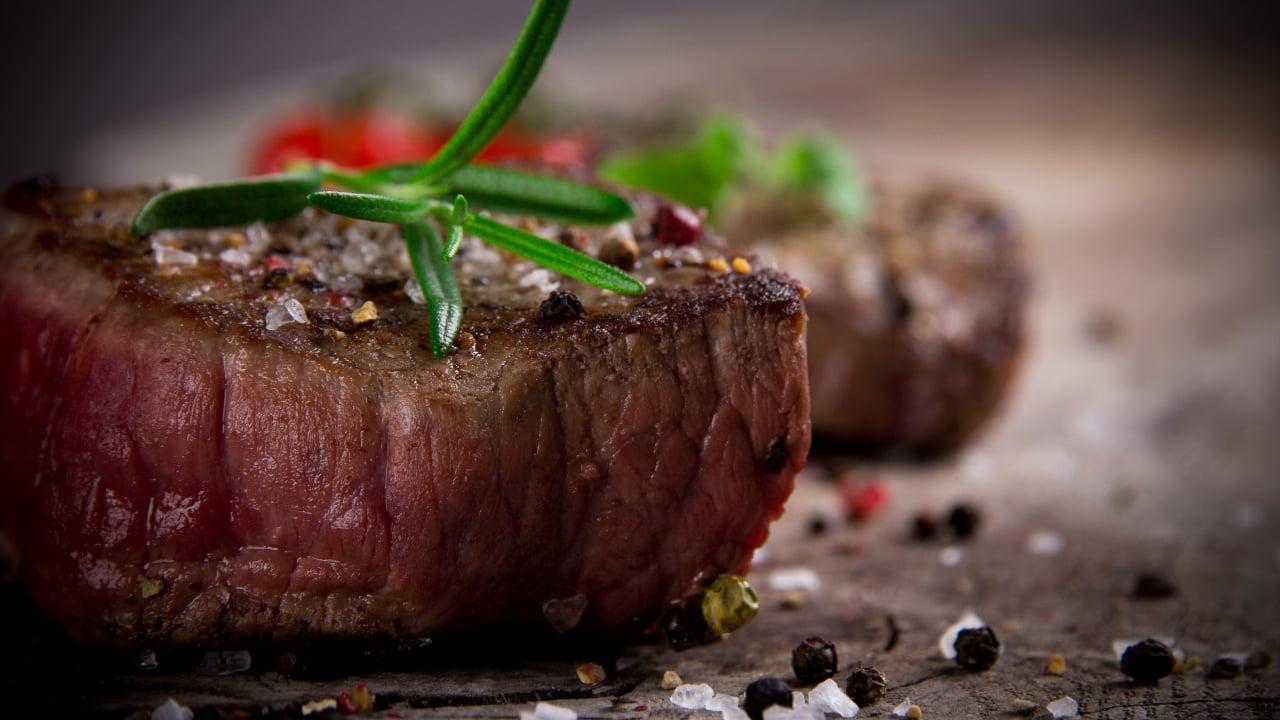

With global warming, some species take advantage of new territories to proliferate. This is the case of ticks, especially the star tick, whose rapid expansion worries researchers. Historically present in the south-east of the United States, it now colonizes whole regions of the North and the West, formerly inaccessible because of the cold. This progression leads to a brutal increase in cases of red meat allergy, a still unknown disorder called alpha-far syndrome.
An allergy in full explosion
Still little known fifteen years ago, Alpha-Gal syndrome is currently experiencing spectacular progression. In 2009, only a few dozen cases were identified in the United States. In 2025, CDC estimates suggest that nearly 450,000 people may be affected. This figure, although imprecise because of an important sub-diagnosis, reflects a disturbing dynamic. The main manager: Ambly control Americanumbetter known as star tick. Originally from the south-east of the United States, this species has spread to the north and west of the country, reaching states like Maine or Illinois, previously too cold for it. An expansion made possible by the increase in temperatures linked to climate change.
In France, the situation seems for the moment marginal. The first proven case was identified in 2023 in Puy-de-Dôme, on a patient without a travel history. It would be awareness caused by a local tick (Ricinus ixodes), paving the way for new hypotheses on potential vectors in Europe. Although no epidemiological series has been reported to date, vigilance increases in medical and entomological circles. European ticks, already vectors of diseases such as Lyme borreliosis, could also play a role in the future emergence of Alpha-Gal syndrome. In a context of global warming and rapid evolution of ecosystems, the emergence of unpublished allergies could be only a taste of future challenges.
Insidious symptoms and upset life
But what is the link to be ticks and meat allergy? The bite of certain ticks can raise awareness of the human immune system of a molecule present in red meat, alpha-ga. This exhibition leads to the production of specific IgE, causing an allergy when consumes beef, pork or lamb.
However, Alpha-Gal syndrome is distinguished by the slowness of its allergic reaction. Unlike conventional allergies – such as peanuts or crustaceans – symptoms appear with a gap from two to eight hours after ingestion. This latency makes the identification of the trigger particularly difficult. Patients can feel itchy, redness, digestive disorders or, in serious cases, anaphylactic shock. The link with red meat is therefore not always established immediately, especially since the meals concerned do not necessarily cause a reaction each time.
This unpredictable character transforms everyday life, recalls The Guardian. Heather O'Bryan, diagnosed in 2019, has since lived in permanent vigilance. She had to eliminate not only red meat, but also all products from mammals: milk, gelatin, certain drugs, even food additives. Current products such as toothpaste or certain toilet papers may contain animal by-products, which considerably complicates daily purchases. “I cried in front of a radius of frozen pizzas,” she says, faced with the impossibility of shopping normally.
The fear of eating outside settles down. Care contamination in the kitchen is frequent, and simple cooking steam may be enough to trigger a reaction. For many, social life is reduced. Sharon Pitcairn Forsyth pleads for reinforced labeling of products containing traces of alpha-ga, believing that the people concerned live in permanent insecurity in the face of an invisible, but omnipresent danger.
Other ticks incriminated beyond the south
For a long time, we considered the star tick (Ambly control Americanum) like the only vector of alpha-far syndrome in the United States. But this certainty vacillates. Two recent cases, studied by American centers for the control and prevention of diseases (CDC), revealed the presence of anti-alpha-far antibodies in patients bitten in areas where the star tick is almost absent. One concerns a 61 -year -old woman in the Washington state, the other a patient from Maine, aged 45. In both situations, the bite was followed by a significant rise in antibodies specific to the Alpha-Gal. The species incriminated? Ixodes pacificusthe western tick on black legs, and Ixodes scapularisbetter known as the deer tick.
These observations question the idea of a single vector. Professor Douglas Norris, specialist in microbiology at the Johns Hopkins Bloomberg School of Public Health, stresses that ” Tick populations explode throughout the country ». In addition, their geographic progression clearly follows that of temperatures. Global warming is expanding their natural habitat, mechanically increasing the risk of exposure.
At the same time, research has highlighted the presence of Alpha-Gal in the saliva of several species of North American ticks. The direct link between bite and trigger of the allergy is not yet formally demonstrated for all these species. However, these signals strengthen the need for increased monitoring. The potentially vector tick scope widens, and with it, geography of risk.
A sanitary emergency in need of means
Faced with the rapid rise of alpha-far syndrome and the geographic expansion of vector ticks, the means allocated to research and prevention appear largely insufficient. Laura Harrington, entomologist at Cornell University, deplores a paradoxical situation in the Guardian. “” There is an urgency to develop new treatments, but funding regresses ». In the United States, budget cuts within CDCs and NIHs weaken efforts to follow the evolution of ticks and understand the complex immunological mechanisms of this allergy.
In parallel, other diseases transmitted by ticks are also progressing. Lyme disease, anaplasmosis, babesiosis and the Powassan virus settled in new regions permanently. In Canada, Lyme cases went from 144 in 2009 to more than 5,000 in 2024. Heather Coatsworth, from the National Laboratory of Microbiology of Winnipeg, plans that this figure could be multiplied by a hundred by 2050. An almost certain increase if the climate continues to evolve at the current rate.
In this context, prevention becomes a priority lever. Wearing covering clothing, the use of repellents and the careful body inspection after exposure in kind are simple, but effective gestures. Platforms like Etick.ca allow you to identify online ticks. They also play a key role in awareness. Alpha-Gal syndrome illustrates a silent transformation of health risks linked to the environment.

With an unwavering passion for local news, Christopher leads our editorial team with integrity and dedication. With over 20 years’ experience, he is the backbone of Wouldsayso, ensuring that we stay true to our mission to inform.


