
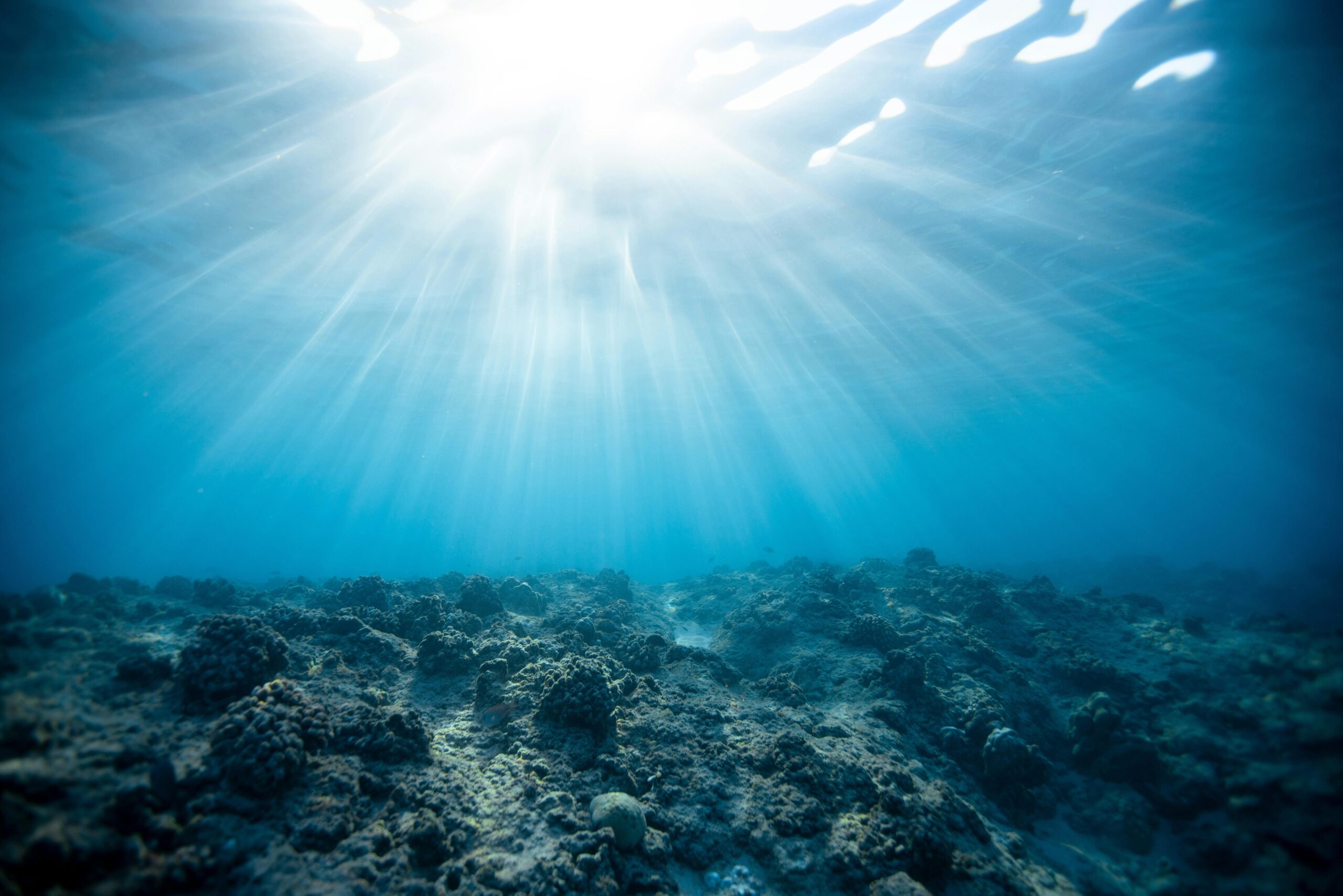

The deep sea has long been a world apart, difficult to access and reserved for short exploration missions. While space captures attention and mobilizes discovery missions, the sea depths still remain largely unexplored, even though they are home to a large part of life on Earth. Today, this border is starting to shift. A new type of underwater habitat, designed for living and not just observing, perhaps marks the beginning of a new era.
An architecture designed to challenge the depths
In Miami, the American company DEEP presented Vanguard, an underwater habitat prototype. According to Numerama, it can accommodate four people for an entire week at a depth of 20 meters. Indeed, the objective is not limited to staying there. It's about living there, with an appropriate atmospheric pressure. In addition, the modules have been designed as real living rooms. The space reaches approximately 45 square meters, with rest area, integrated diving center and technical equipment allowing scientific experiments to be carried out without constantly going to the surface.
The structure is based on a steel hull, classified by an organization specializing in underwater standards. Furthermore, it is connected to a surface buoy which provides air, water, energy, waste disposal as well as an internet connection stabilized by a generator. Unlike a classic submersible, the habitat does not float. On the contrary, it anchors itself firmly to the seabed, like a small base attached to its environment. Thus, teams can enter and exit diving without major constraints. In fact, the internal pressure remains identical to that of the surrounding water. Thanks to this balance, teams avoid the risks associated with decompression.
An underwater habitat designed to extend exploration
Vanguard is not just a refuge. It was imagined as a habitable laboratory, designed to allow scientists to stay longer below the surface and observe marine life in real time. The possibility of accumulating several hours of observation each day profoundly changes the way we work. Researchers are no longer content with short dives, they live in contact with the environment they study.
The teams take turns to restore coral reefs, observe fragile ecosystems or study the biodiversity that evolves without human intervention. The ocean is once again becoming a permanent scientific field. DEEP discusses the restoration of ecosystems, the study of the impact of climate and the training of future astronauts. In addition, proximity to the unknown, adaptation to an isolated environment and a confined atmosphere make it an excellent training ground. In many ways it is comparable to long-duration space missions.
By making it possible to overcome the limits of time and depth, this type of habitat opens a new avenue for research, climate or the conservation of living environments. It transforms the ocean into a habitable space and no longer just a place of observation.
A step towards sustainable colonization of the ocean floor
The vision carried by the company goes beyond a simple prototype. Vanguard represents the first piece of a network of underwater habitats which could accommodate teams of eight to fifty people at depths of up to two hundred meters. The Sentinel project, announced for the coming years, outlines a multi-level residence capable of operating in partial autonomy for an extended period.
The idea of a continued human presence in the oceans is no longer just fiction. It is based on certified equipment, proven logistics and reflection on how to live in a world without natural light. By observing the oceans from within, humanity could better understand the fragile balances that govern its own environment. Vanguard doesn't just explore the sea floor. It opens up the possibility of staying there, learning there and perhaps one day living there.

With an unwavering passion for local news, Christopher leads our editorial team with integrity and dedication. With over 20 years’ experience, he is the backbone of Wouldsayso, ensuring that we stay true to our mission to inform.


